The Humanitarian Crisis That Sparked a War
Ten million refugees. That staggering number flooded into India from East Pakistan in 1971. Genocide raged across the border. Men were slaughtered systematically. Women faced unspeakable atrocities.
India faced an impossible choice. The wounds of Partition hadn’t healed. Now, millions of desperate people sought shelter. Prime Minister Indira Gandhi tried diplomacy first. President Nixon refused to help.
The USSR’s help to India in the 1971 war became the defining factor that prevented a catastrophic global conflict. Against a hostile coalition comprising the United States, the United Kingdom, and China, the Soviet Union stood alone alongside India.
The Tinderbox: East Pakistan’s Struggle and India’s Dilemma
Linguistic and Economic Discrimination
The seeds of the Bangladesh Liberation War were planted at Pakistan’s birth. In 1947, Muhammad Ali Jinnah declared Urdu would be Pakistan’s sole national language. East Pakistan’s Bengali-speaking majority felt betrayed immediately.
Economic disparity widened the gulf. East Pakistan generated more wealth. West Pakistan controlled all power. The military, government policies, and resources stayed firmly in Western hands.
The Stolen Election of 1970
The 1970 elections changed everything. The Awami League won 167 of 313 seats. Mujibur Rahman should have become Prime Minister. Instead, West Pakistan’s military and leaders cancelled the results outright.
East Pakistan erupted. Decades of discrimination exploded into open rebellion. The demand for an independent Bangladesh echoed through Dhaka’s streets.
Pakistan’s Brutal Crackdown
Pakistan’s military response was savage. Over 300,000 people were massacred. Hospitals and schools became killing grounds. The Pakistani army showed no mercy to civilians.
Refugees streamed across the border. India couldn’t ignore the humanitarian catastrophe. Yet declaring war required justification under international law.
Pakistan’s Pre-emptive Strike
December 3, 1971, changed everything. Pakistani warplanes bombed eleven Indian airfields. Kashmir’s military bases came under attack. Pakistan hoped to cripple India’s air force before the war began.
The gambit failed. Indian forces weren’t neutralized. Instead, Pakistan’s aggression gave India the legal justification it needed. On December 3, India formally declared war.
The Global Chessboard: A World Against India
Cold War Calculations
The Indo-Pak War of 1971 occurred at the height of Cold War tensions. Afghanistan and China had aligned with the USSR. Communism was spreading across Asia.
America viewed Pakistan as crucial. Through CENTO and SEATO treaties, Pakistan served as America’s South Asian bulwark. Losing Pakistan meant losing strategic ground to Soviet influence.
The Hostile Coalition Forms
President Richard Nixon and his advisor Henry Kissinger made their position clear. They stood with Pakistan unequivocally. Britain joined immediately. China is prepared to support Pakistan militarily.
India stood isolated. The world’s most powerful nations aligned against it. Only the Soviet Union offered friendship.
Task Force 74: America’s Nuclear Threat
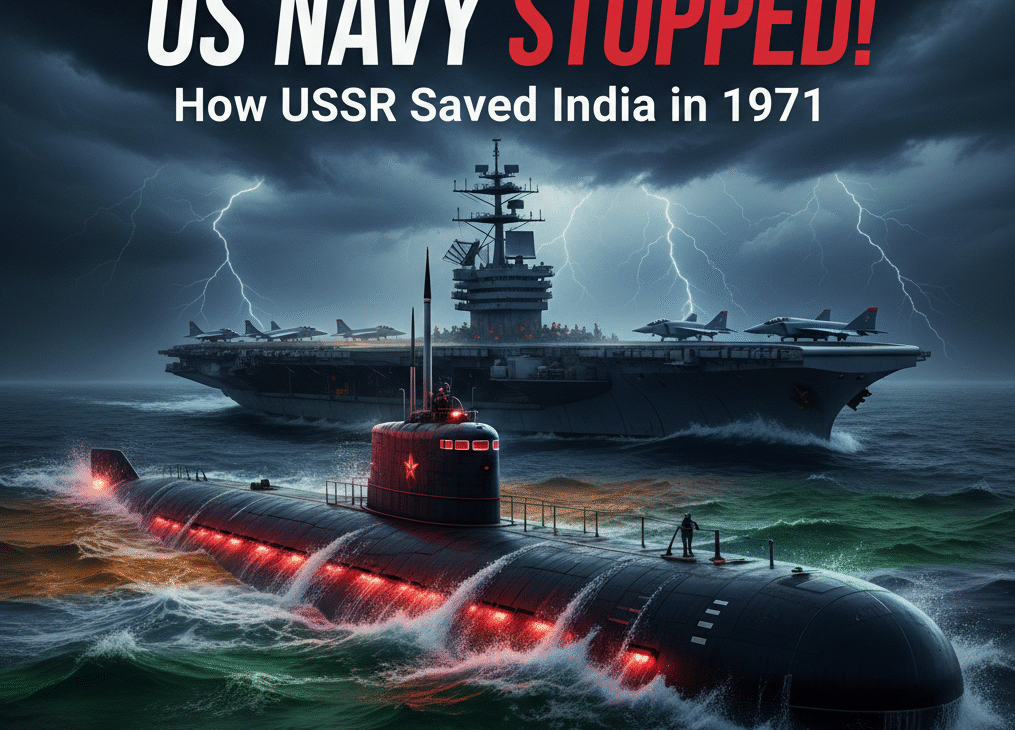
December 10 brought shocking news. The United States dispatched Task Force 74 to the Bay of Bengal. Leading the fleet was USS Enterprise—the world’s largest nuclear aircraft carrier.
The armada was formidable. Seventy fighter jets and bombers sat on Enterprise’s deck. Guided missile cruiser USS King accompanied the carrier. Destroyers USS Decatur and Parsons provided additional firepower. Amphibious assault ship USS Tripoli completed the battle group.
India possessed only INS Vikrant. The comparison was stark. America’s Seventh Fleet dwarfed India’s modest naval capabilities.
Britain’s Pincer Movement
British forces approached from the west. HMS Eagle, laden with thousands of tons of bombs and destroyers, aimed to box India in. The strategy was clear: trap India between two massive naval forces.
The situation looked desperate. India faced nuclear-armed fleets on two fronts while fighting a land war against Pakistan.
The Shield: The Indo-Soviet Treaty of Friendship
Foresight and Preparation
Four months before the war erupted, India and the USSR signed a historic pact. On August 9, 1971, the Treaty of Friendship 1971 was formalized. Its terms were revolutionary.
One clause proved decisive. If any foreign power attacked India, the USSR was obligated to defend it. This wasn’t a symbolic friendship. It was a binding military commitment.
Soviet Intelligence Uncovers the Plot
Soviet intelligence agencies detected the Anglo-American plan. Their sources revealed the conspiracy to encircle India in the Bay of Bengal. The West aimed to force India’s surrender through overwhelming naval superiority.
Moscow acted immediately. The Soviet government recognized the threat to its ally. More importantly, they understood the geopolitical stakes.
Soviet Gambit: The Navy That Stood Down Armadas
The 10th Operative Battle Group
December 13 witnessed the Soviet response. Admiral Vladimir commanded the 10th Operative Battle Group into action. The fleet Moscow dispatched was formidable and equipped with nuclear weapons.
Two cruisers led the formation. Six destroyers provided firepower. Multiple submarines—critically armed with nuclear weapons—completed the task force. Support vessels ensured operational continuity.
The USSR wasn’t bluffing. They deployed genuine military power capable of challenging American naval supremacy.
A Brilliant Psychological Operation
Soviet commanders devised a masterful deception. When American ships approached, Soviet submarines would simultaneously surface. The tactic created an illusion of overwhelming numbers.
Multiple submarines breaking the surface suggested a massive Soviet presence. The Americans would believe they were surrounded. Psychology would achieve what raw numbers might not.
The plan worked flawlessly. Within days, Soviet commanders intercepted British communications. Admiral Gordon warned the American Seventh Fleet about the “heavy concentration” of Soviet submarines in the ocean.
The Retreat
The intercepted message revealed panic. British and American commanders reassessed their position. Proceeding risked confrontation with Soviet nuclear forces.
USS Enterprise and its battle group turned toward Sri Lanka. They never entered Indian territorial waters. The British submarine redirected toward Madagascar. The encirclement plan collapsed entirely.
INS Vikrant could operate freely. The external threat vanished because Soviet naval might deterred Western intervention.
India’s Triumph and The Birth of Bangladesh
The Final Offensive
With the naval threat neutralized, India’s military advanced rapidly. General Manekshaw and General Jagit Singh Arora led Indian forces toward Dhaka. Pakistani defenses crumbled under the assault.
Indian troops encircled Dhaka from three directions. The siege of the Governor’s House began. Pakistani high command met inside, surrounded and desperate.
Unconditional Surrender
Pakistan requested a ceasefire. General Arora refused outright. Only unconditional surrender was acceptable now. Pakistan’s position was hopeless.
December 16, 1971, marked the end. 93,000 Pakistani soldiers laid down their arms. It was the largest military surrender since World War II.
“Dhaka Is Now Free”
Indira Gandhi made her historic declaration. “Dhaka is now the free capital of a free country.” Bangladesh was born. The Bangladesh Liberation War achieved its goal.
The victory was comprehensive. India’s military prowess was undeniable. Pakistan’s territorial integrity was shattered. A new nation emerged from the ashes of oppression.
Why Did America Threaten India?
Cold War Paranoia
America’s hostility stemmed from geopolitical fear. India’s growing relationship with the USSR alarmed Washington. The Soviet Union was expanding its influence aggressively.
President Nixon harbored racist views about Indians. His personal prejudices colored American policy. The infamous Nixon tapes revealed his contempt for Prime Minister Gandhi and the Indian people generally.
Containing Soviet Expansion
America feared Soviet dominance in Asia. If India defeated Pakistan decisively, Soviet influence would expand dramatically. Pakistan served as a buffer state in American strategic thinking.
Losing Pakistan meant losing South Asia. The domino theory suggested communism would spread unchecked. America couldn’t allow that outcome.
The USSR’s Calculated Deterrence
Strategic Brilliance
The Soviet intervention wasn’t impulsive. It was calculated military deterrence at its finest. Moscow demonstrated a credible willingness to defend India militarily.
The nuclear-armed submarines made the threat real. American commanders understood engagement risks. Nuclear escalation became possible if navies clashed.
The Treaty’s Vindication
The Treaty of Friendship of 1971 proved its worth immediately. What seemed like diplomatic formality became India’s salvation. Soviet commitment wasn’t empty words.
The treaty fundamentally altered the strategic calculus. Western powers couldn’t isolate India diplomatically or threaten it militarily. The Soviet nuclear umbrella provided genuine security.
A Defining Chapter in Indo-Soviet Relations
The Cold War in South Asia reached its climax in December 1971. The USSR’s support transcended rhetoric. Moscow risked confrontation with America to honor its commitment.
This moment cemented Indo-Soviet friendship for decades. India never forgot who stood beside it when the world aligned against it. The Soviet Union earned lasting gratitude.
The 1971 war demonstrated that military might combined with diplomatic foresight achieves victory. India’s preparation through the Treaty of Friendship proved decisive. The USSR’s naval intervention provided the breathing room India needed.
Bangladesh’s independence came at a high cost. But it also showcased how smaller nations can resist superpower pressure with the right alliances. The Soviet naval deployment changed history’s course.
Conclusion: When Deterrence Changed History
The USSR didn’t just support India diplomatically. Soviet nuclear submarines in the Bay of Bengal prevented a catastrophic escalation. American and British naval forces retreated rather than risk confrontation.
The USSR’s help to India in the 1971 war exemplified Cold War alliance politics at their most consequential. Military deterrence worked because the Soviet commitment was credible. India gained the strategic space to achieve a decisive military victory.
The Treaty of Friendship wasn’t merely symbolic. It was a binding commitment that Moscow honored completely. When India needed help desperately, the Soviet Union delivered.
The birth of Bangladesh marked South Asia’s transformation. Pakistan’s military power was broken decisively. India emerged as the region’s dominant force. The Soviet Union’s role was absolutely pivotal.
This chapter in the Indo-Pak War 1971 history reminds us that alliances matter. Diplomatic preparation creates options during crises. The treaty signed in August proved decisive in December.