Introduction
Subhas Chandra Bose early life laid the foundation for one of India’s most revolutionary leaders. Born in 1897 during British rule, his journey from a spiritually inclined student to a nationalist icon reveals the making of extraordinary leadership. His childhood, education, and early decisions shaped his commitment to India’s independence.
Understanding his formative years explains how brilliance, spirituality, and sacrifice converged in one remarkable individual.
Family Background and Childhood
Subhas Chandra Bose was born on January 23, 1897, in Cuttack, Orissa. His father, Janakinath Bose, worked as a prominent lawyer and participated actively in the Indian National Congress. Later, Janakinath returned the ‘Rao Bahadur’ title to protest British repression during Gandhi’s Non-Cooperation Movement.
His mother, Prabhavati Devi, managed their household with eleven children efficiently. Subhas was the ninth child in this large family.
Ancestral Legacy and Values
The Bose family traced its lineage to ministers and admirals under the Sultanate of Bengal. Mahipati Bose (Subuddhi Khan) and Gopinath Bose (Purandara Khan) served as prominent officials. Consequently, religious tolerance became a natural household value.
In his autobiography, Subhas recalled participating in Muslim festivals like Muharram. He grew up harmoniously with neighbors of different faiths. This interfaith exposure shaped his inclusive worldview.
Education and Academic Excellence
Subhas demonstrated prodigious intelligence from childhood. His academic achievements revealed natural leadership abilities early on.
In 1913, he moved to Kolkata to study at Presidency College. His brilliance continued to shine through his university years. However, his idealism would soon clash with colonial realities.
The Presidency College Incident
A pivotal moment occurred in 1916 during Subhas Chandra Bose’s early life and education. He led a student protest against British professors who insulted Indian students. The college authorities expelled him for this act of defiance.
Despite this setback, he secured admission to Scottish Church College. He graduated with a Philosophy degree in 1919, ranking second in his class. His academic excellence remained unshaken by the expulsion.
Spiritual Influences and Ideological Formation
Alongside his brilliance, Subhas experienced a deep spiritual yearning. The influence of Swami Vivekananda on Subhas Chandra Bose proved transformative. He immersed himself in yogic studies and the teachings of Ramakrishna Paramahamsa.
At age 15, he experienced intense inner conflict between worldly pursuits and spiritual elevation. He journeyed to holy cities across North India with friends, seeking a spiritual guru.
The Badrinath Encounter
Though he didn’t find a guru initially, a monk in Badrinath left a lasting impression. The monk urged him to dedicate his talents to liberate the nation. This counsel echoed Vivekananda’s ideals of serving humanity through national service.
During his college years, Subhas founded the ‘Vivekananda Sangh.’ This organization encouraged spiritual and political awakening among youth. His revolutionary fervor began attracting national attention.
Indian Civil Services Examination and Resignation
Subhas Chandra Bose’s family background influenced his father’s desire for him to join the prestigious Indian Civil Services. In 1919, he traveled to England to pursue this goal.
He passed the ICS exam in 1920, securing fourth rank. His success demonstrated exceptional intellectual capability. However, he faced a profound moral dilemma.
source: Livemint
Why Subhas Chandra Bose Resigned from ICS
Should he serve the British colonial administration or fight for India’s independence? This question troubled his conscience deeply.
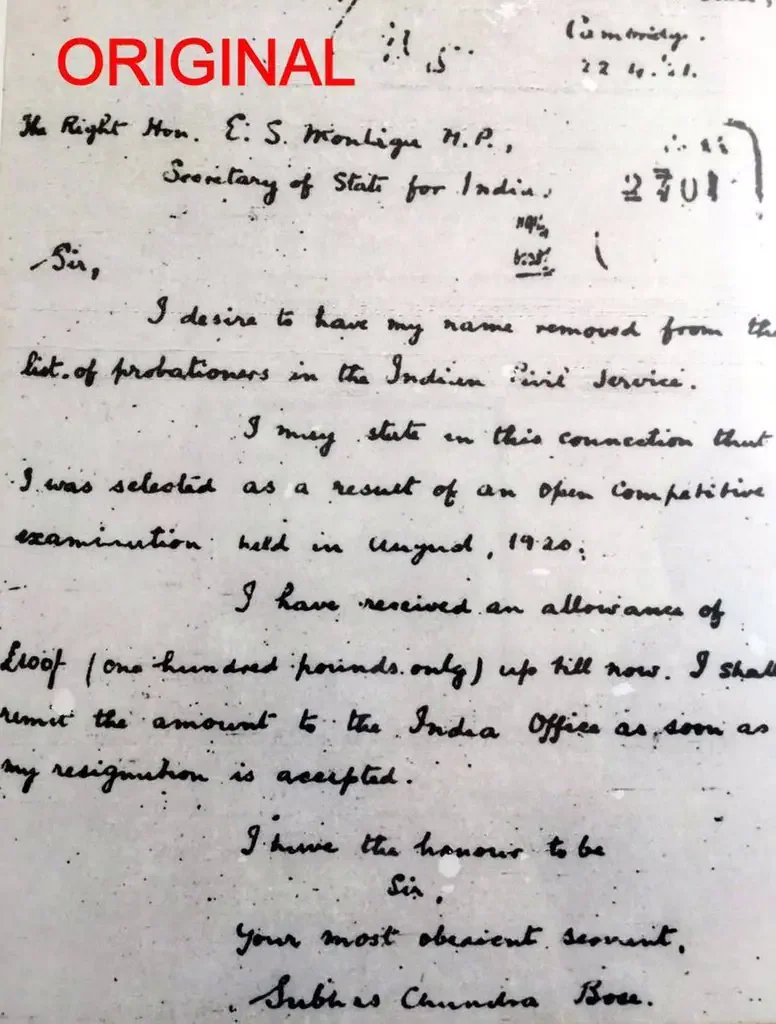
Ultimately, Subhas chose principles over personal gain. He resigned from the ICS in 1921. He wrote to Secretary Montague, formally withdrawing his candidacy.
This bold decision made headlines across Britain and India. People admired his willingness to sacrifice a lucrative career for his ideals. The resignation marked a turning point in his life’s direction.
Early Commitment to National Service
Even as a student, Subhas engaged in social service activities. He helped plague and cholera victims during outbreaks. He organized student welfare initiatives to support his peers.
His resignation from the ICS solidified his commitment to India’s liberation. He returned to India inspired by nationalist ideals. His determination to dedicate his life to the country’s service became unshakeable.
Moreover, his relentless self-discipline set him apart. He combined moral courage with practical action. These qualities would define his later leadership.
Conclusion
Subhas Chandra Bose early life reveals how exceptional leadership develops through formative experiences. His childhood in an interfaith household taught tolerance. His education demonstrated intellectual brilliance. Spiritual influences provided moral direction.
The decision to resign from ICS exemplified his commitment to principles over privilege. These early years shaped a leader who would inspire generations. His journey from spiritually inclined youth to revolutionary icon began with courage, sacrifice, and unwavering dedication to India’s freedom.