Introduction
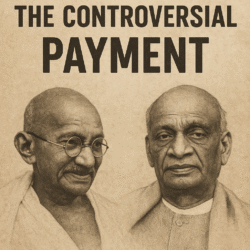
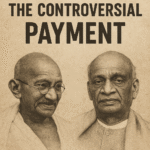
The ₹55 crore payment to Pakistan in 1948 remains one of the most debated financial decisions in India’s early independence period. This payment, part of the asset division agreement following Partition, became a flashpoint of political tension when it intersected with the Kashmir conflict and Mahatma Gandhi’s famous fast in January 1948.
This article examines the historical context, key decisions, and outcomes surrounding this controversial financial settlement between India and Pakistan.
Historical Context: Partition and Financial Settlement
When British rule ended on August 15, 1947, the Indian subcontinent was divided into two dominions: India and Pakistan. This division required the splitting of assets, including financial reserves, military equipment, and administrative resources.
As part of the division agreement, India was obligated to transfer ₹55 crores (550 million rupees) to Pakistan. This India Pakistan financial settlement 1947 was intended to ensure both nations could establish their governmental operations.
However, the immediate aftermath of Partition brought massive migration, widespread violence, and regional instability, complicating the execution of this agreement.
Why the ₹55 Crore Pakistan Payment Was Withheld
By late 1947, Kashmir became a major point of conflict. Pakistani forces had launched military operations in the princely state, prompting India to airlift troops to defend the region.
Sardar Vallabhbhai Patel, India’s Deputy Prime Minister, argued that the financial payment should be withheld until the Kashmir situation was resolved. On January 12, 1948, Patel publicly stated:
“We were therefore fully justified in providing against aggressive actions regarding Kashmir by postponing the implementation of the agreement… I made it quite clear then that we would not agree to any payment until the Kashmir affair was settled.”
Patel viewed withholding the funds as a strategic measure—a non-violent way to pressure Pakistan to halt its military operations in Kashmir. This decision was supported by many in the Indian government who saw it as a practical wartime strategy.
Gandhi’s Position on the Payment Dispute
Mahatma Gandhi strongly opposed the decision to withhold the payment. He believed that India had a moral and legal obligation to honor the financial agreement, regardless of ongoing conflicts.
Gandhi argued that withholding the payment violated principles of righteousness and could undermine India’s moral standing internationally. He viewed the agreement as a binding commitment that should not be conditional.
The Gandhi Fast in 1948: Timeline and Impact
On January 12, 1948, Gandhi announced he would undertake a fast unto death unless the government reversed its decision and released the ₹55 crores to Pakistan.
Gandhi stated: “A time comes when a worshipper of Ahimsa is forced to start fast to express his opposition to any injustice to society… Such a critical moment has come for me.”
The fast began on January 13, 1948. According to historical accounts, Sardar Patel initially left Delhi in protest against Gandhi’s action, highlighting the deep division within India’s leadership on this issue.
Gandhi’s fast created immense public pressure. Thousands gathered at Birla House where he was staying, and the nation watched anxiously as his health deteriorated.
Government’s Final Decision on the ₹55 Crore Payment
On January 17, 1948, the Government of India capitulated to Gandhi’s moral pressure. An official press note announced:
“Given the appeal made by Gandhiji to the nation, the Government has decided to remove the one cause of suspicion and friction between the two States… They make this spontaneous gesture in the earnest hope that it will help in producing an atmosphere of goodwill for which Gandhiji is suffering crucifixion of the flesh…”
The payment was released to Pakistan, effectively ending Patel’s strategic withholding policy.
Despite this gesture of goodwill, Pakistan did not alter its military stance in Kashmir. The conflict continued, eventually leading to the first Indo-Pakistan war and UN intervention.
Outcome and Historical Significance
The ₹55 crore payment controversy highlighted fundamental tensions in India’s early governance:
Policy vs. Principle: The dispute illustrated the conflict between strategic political decisions (Patel’s position) and moral-ethical commitments (Gandhi’s stance).
Government Independence: The incident raised questions about how a democratic government should respond to moral pressure from influential national figures.
Indo-Pakistan Relations: Despite the payment, it did not improve bilateral relations or resolve the Kashmir dispute, which continues to affect both nations decades later.
The event occurred just days before Gandhi’s assassination on January 30, 1948, making it one of the last major political controversies in which he was directly involved.
Common Misconceptions About the 1948 Payment
Misconception 1: “Gandhi forced the government to give money to the enemy during war.”
Fact: The payment was a pre-agreed financial obligation from the Partition settlement, not a new gift. Gandhi believed honoring agreements was essential to India’s international credibility.
Misconception 2: “The ₹55 crores funded Pakistan’s war effort in Kashmir.”
Fact: The funds were part of the general asset division. While timing was problematic, the payment was a settlement of Pakistan’s share of pre-Partition government reserves, not military aid.
Misconception 3: “Sardar Patel opposed paying Pakistan anything.”
Fact: Patel did not oppose the payment itself but argued for postponement until the Kashmir conflict was resolved. He supported using financial leverage as a diplomatic tool.
Misconception 4: “This was the only payment India made to Pakistan.”
Fact: The ₹55 crores was part of a larger asset division. Multiple financial and material transfers occurred as part of the Partition settlement.
Conclusion
The ₹55 crore payment to Pakistan in 1948 represents a complex moment in Indian history where legal obligations, strategic considerations, and moral principles collided.
The Gandhi fast in 1948 succeeded in compelling the government to honor its financial commitment, but it also exposed deep ideological divisions within India’s leadership during a critical period.
Understanding this event requires examining it within the broader context of Partition, the Kashmir conflict, and the competing visions for how independent India should navigate international obligations during wartime.
This historical episode continues to inform discussions about governance, moral leadership, and India-Pakistan relations today.