Introduction
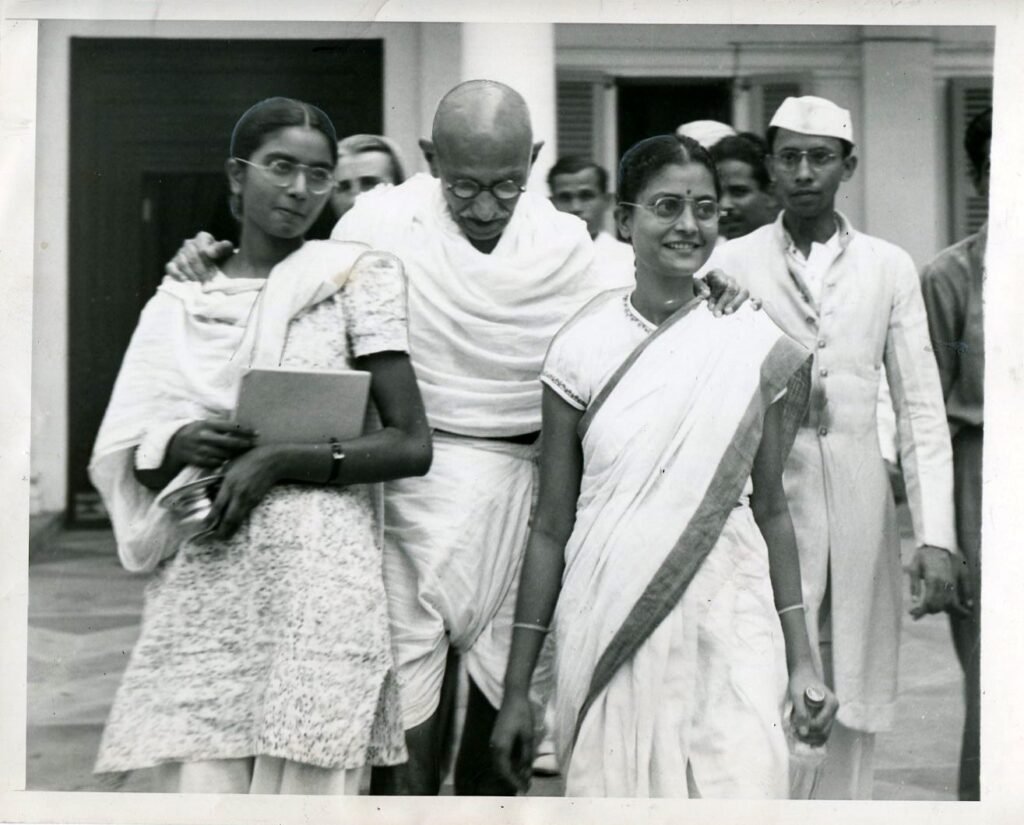
The question of why Nathuram Godse assassinated Mahatma Gandhi continues to provoke intense debate, reflection, and controversy in India’s political and historical discourse. On 30 January 1948, when Mahatma Gandhi was shot dead in New Delhi, the nation lost not only its most influential moral leader but also the symbol of its non-violent freedom struggle. Yet the assassination did not emerge from a vacuum. It was the culmination of deep ideological conflict, political disillusionment, and the unresolved trauma of Partition.
In his historic courtroom statement, Nathuram Godse presented a detailed justification for his actions. He framed the assassination as a political act rather than a personal crime. Drawing heavily from his written defense, later published as Gandhiji’s Politics X-Rayed, Godse attempted to place Gandhi’s political decisions under scrutiny. He argued that Gandhi’s policies weakened India, encouraged communal division, and ultimately led to Partition.
This article examines why Nathuram Godse assassinated Mahatma Gandhi by analyzing the ideological arguments Godse himself advanced. Rather than endorsing any viewpoint, it situates his claims within their historical context. By doing so, it helps readers understand the clash between Gandhian moral idealism and militant nationalist thought that shaped one of the darkest chapters of independent India.
The Political Context Behind Gandhi’s Assassination
The Gandhi assassination’s political perspective cannot be understood without examining the volatile political climate of late colonial India. By the 1940s, Indian nationalism was deeply fractured. The Indian National Congress, the Muslim League, and various ideological groups were competing to define the future of the subcontinent. Communal tensions had already hardened long before independence arrived.
Godse’s courtroom statement began by placing responsibility on what he viewed as the Congress leadership’s repeated compromises. He believed the Congress failed to maintain ideological clarity on national identity. In his view, concessions to communal politics beginning with separate electorates and culminating in Partition eroded India’s unity.
Godse argued that Mahatma Gandhi’s moral authority made him politically infallible. Because Gandhi’s approval carried immense weight, his decisions shaped Congress policy even when they were, in Godse’s eyes, strategically unsound. This imbalance, Godse claimed, allowed emotional appeals and moral pressure to override hard political realities.
From this perspective, the assassination was rooted in politics rather than religious hatred. Godse framed his grievance as a reaction to statecraft that, he believed, failed to protect national interests. Whether one accepts or rejects this claim, it highlights how deeply politics—not merely personal animosity—dominated the motivations behind the act.
Congress, Communal Politics, and Early Fault Lines
Godse traced the origins of India’s political fragmentation to the early twentieth century. He pointed to the introduction of communal electorates in 1906 as a turning point. According to him, this institutionalized religious identity within politics has weakened national cohesion.
He acknowledged that Congress was founded on ideals of representation and unity. However, he believed these principles were gradually abandoned in the pursuit of short-term political harmony. Godse argued that repeated negotiations with communal groups legitimized separatist demands instead of confronting them.
In his view, British “divide and rule” policies succeeded because Indian leaders failed to resist them decisively. By accommodating communal interests, the Congress inadvertently reinforced divisions that later exploded during Partition.
Nathuram Godse’s Ideology and Critique of Gandhi
To understand Nathuram Godse’s ideology, one must examine how he interpreted Gandhi’s leadership. Godse did not deny Gandhi’s personal integrity. In fact, he acknowledged Gandhi’s commitment to truth, simplicity, and sacrifice. However, he argued that these virtues became dangerous when applied rigidly to governance.
Godse believed Gandhi transformed political disagreement into moral defiance. Those who opposed his views were often portrayed as unethical rather than merely ideological opponents. This, Godse claimed, narrowed political debate and marginalized alternative nationalist visions.
At the heart of Godse’s critique was Gandhi’s doctrine of absolute non-violence. While effective as a resistance strategy against colonial rule, Godse argued that it failed to protect communities during periods of mass violence. Partition, in his view, exposed the limits of moral persuasion when faced with organized brutality.
Godse contrasted Gandhian pacifism with what he described as defensive nationalism. He believed the state had a duty to protect its people—even through force if necessary. This belief became central to his justification for the assassination.
Gandhian Non-Violence vs Militant Nationalism
Godse frequently invoked historical and mythological figures to support his worldview. He cited figures such as Lord Rama, Lord Krishna, Shivaji Maharaj, Rana Pratap, and Guru Gobind Singh as symbols of righteous resistance. According to him, these figures embodied a balance between moral values and decisive action.
He accused Gandhi of dismissing such traditions as violent and regressive. This dismissal, Godse argued, alienated those who believed that strength and resistance were essential to national survival. For many nationalists, Gandhi’s condemnation of armed resistance felt disconnected from historical realities.
Historians note that this ideological conflict reflects a deeper philosophical divide. Gandhi believed moral transformation was the foundation of lasting peace. Godse believed political survival required assertive action. The assassination, therefore, emerged from a collision between these incompatible visions of India’s future.
Godse’s Critique of Gandhi’s Political Decisions
The most extensive part of Godse’s defense involved a systematic review of Gandhi’s political career. His arguments formed the core of Nathuram Godse’s justification, as laid out in Gandhiji’s Politics X-Rayed. Godse presented his critique as evidence that Gandhi consistently favored moral symbolism over political consequences.
He organized Gandhi’s career into phases, each marked by what he perceived as strategic errors. From early alliances to post-Partition decisions, Godse argued that Gandhi’s influence repeatedly shaped outcomes that harmed Hindu political interests.
Central to this critique was the claim that Gandhi blurred the line between religion and politics. While Gandhi sought harmony, Godse believed this approach emboldened separatist forces. Over time, he argued, gestures meant to promote unity were interpreted as weakness.
This critique must be read critically. Many historians argue that Godse selectively interpreted events while ignoring broader colonial pressures. Still, his arguments remain significant because they reflect the mindset of radical nationalist opposition during that period.
Gandhi’s Political Choices and the Rise of Communal Polarisation
A major pillar of Nathuram Godse’s justification rested on his belief that Gandhi’s political experiments unintentionally deepened communal divisions. In his courtroom statement, Godse repeatedly argued that Gandhi’s pursuit of unity relied on symbolic gestures rather than enforceable political safeguards. According to him, this imbalance encouraged communal assertiveness instead of reconciliation.
Godse maintained that Gandhi’s interventions often favored appeasement over accountability. He believed that the repeated emphasis on Hindu restraint created an asymmetry in expectations, where one community was urged to forgive while the other faced no political consequences. This perception became central to his ideological break from Gandhian politics.
Historians note that these claims reflect a broader post-independence frustration rather than isolated grievances. However, Godse’s narrative provides insight into how radical nationalist thought interpreted Gandhi’s political legacy during a period of national trauma.
The Khilafat Movement and Political Religious Alignment
One of Godse’s earliest criticisms focused on the Khilafat Movement of 1920–21. Gandhi supported the movement to build Hindu–Muslim unity by aligning Indian nationalism with Muslim leaders protesting the dissolution of the Ottoman Caliphate. To Gandhi, this was a strategic alliance against British rule.
Godse viewed this decision as a turning point. He argued that introducing a pan-Islamic religious issue into Indian politics weakened secular nationalism. In his interpretation, the movement legitimized religious mobilization as a political tool, setting a precedent that later empowered communal demands.
The failure of the Khilafat Movement and its violent aftermath reinforced Godse’s belief that religious solidarity could not serve as a stable foundation for national unity. Instead of fostering harmony, he argued, it institutionalized sectarian politics within the freedom movement.
The Moplah Rebellion and Moral Silence
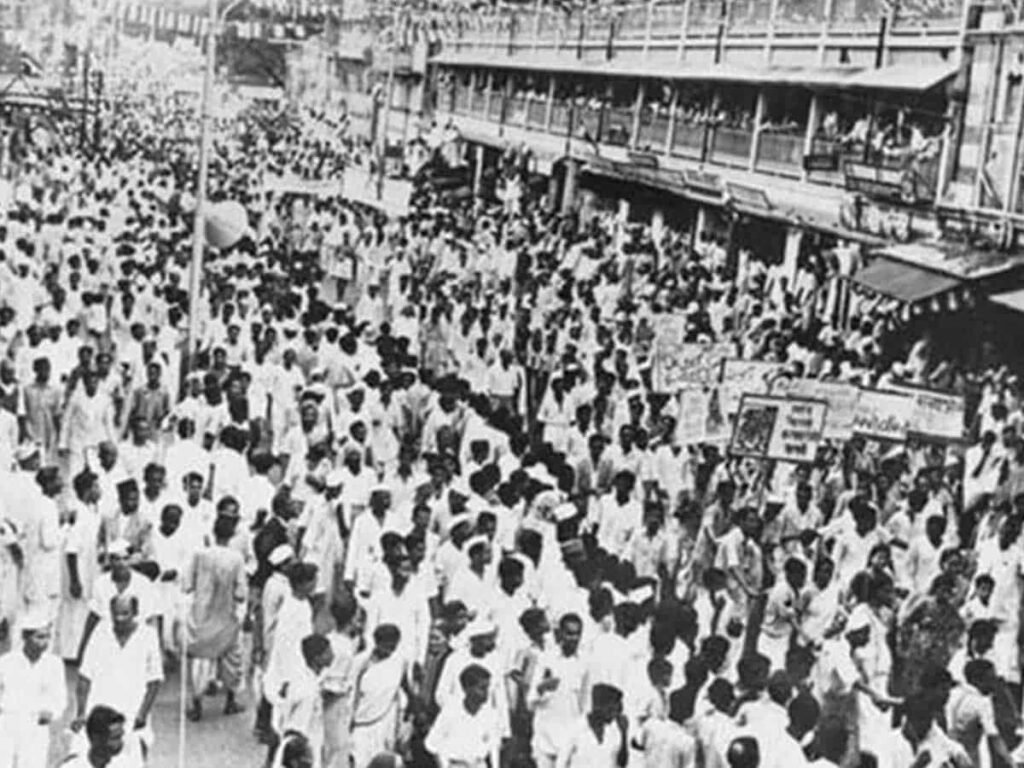
Godse’s critique intensified with reference to the Moplah Rebellion in Malabar. This uprising involved brutal violence against Hindu communities, including forced conversions and mass killings. Godse accused Gandhi of responding inadequately to these atrocities.
According to Godse, Gandhi’s decision to organize relief funds rather than publicly condemn the perpetrators symbolized moral inconsistency. He interpreted this as selective compassion that prioritized reconciliation over justice. In Godse’s reasoning, such responses eroded Hindu confidence in national leadership.
Modern historians contextualize the rebellion as a complex agrarian and colonial conflict. Still, Godse’s interpretation reveals how silence—or perceived silence—during communal violence contributed to radical political alienation.
From Negotiation to Partition: Political Concessions and Disillusionment
As India moved closer to independence, the partition and Gandhi’s assassination became inseparable in Godse’s reasoning. He believed the political negotiations of the 1930s and 1940s systematically weakened India’s unity. Each compromise, in his view, validated separatist ambitions.
Godse argued that Gandhi’s moral authority discouraged firm resistance to communal demands. Instead of confronting the Muslim League’s separatist agenda early, Congress leaders repeatedly sought accommodation. According to Godse, this strategy emboldened rather than restrained communal politics.
This period, marked by negotiations and broken agreements, deepened Godse’s conviction that Gandhi’s leadership had failed to safeguard national integrity.
Communal Award and Separate Electorates
Godse condemned Gandhi’s role in the aftermath of the Communal Award, which formalized separate electorates for Muslims. Although Gandhi protested aspects of the award, Godse believed his eventual acceptance legitimized communal division.
From Godse’s perspective, this decision institutionalized religious identity within democratic representation. He argued that once political power was tied to religious categories, unity became impossible. The Congress’s acceptance of these structures, he claimed, normalized separatist logic.
Historians counter that Gandhi viewed compromise as a temporary necessity. However, Godse saw it as a permanent fracture in India’s political foundation.
Quit India vs “Divide and Quit”
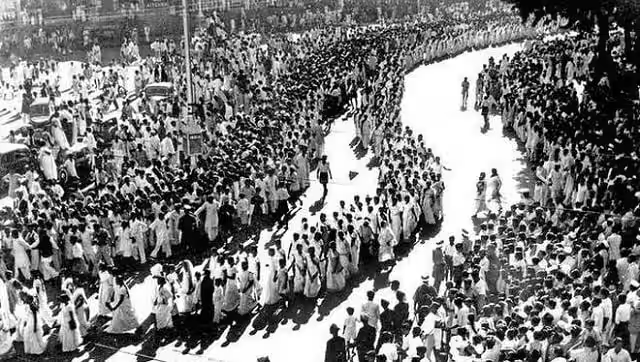
Godse sharply contrasted the 1942 Quit India Movement with the Muslim League’s political strategy during World War II. While Congress leaders were imprisoned and the movement was suppressed, the League remained active in negotiations with the British.
According to Godse, this imbalance allowed the League to consolidate political power. He accused Gandhi of misjudging the consequences of mass civil disobedience without institutional leverage. In his view, this created space for the League’s demand for Pakistan.
This divergence reinforced Godse’s belief that moral protest alone could not counter organized political maneuvering.
The Final Break: Partition Trauma and Political Rage
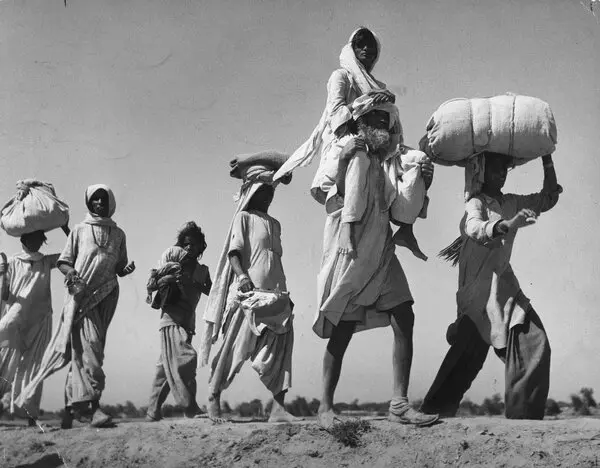
The violence of 1947 marked the emotional climax of Godse’s ideological journey. The mass displacement, massacres, and humanitarian collapse profoundly affected Indian society. For Godse, these events symbolized the catastrophic failure of Gandhian politics.
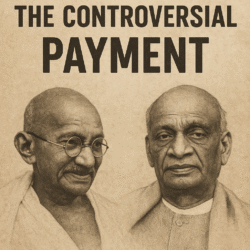
The decision to transfer ₹55 crore to Pakistan, supported by Gandhi through a hunger fast, became the final rupture. Godse interpreted this act as valuing moral consistency over national suffering. To him, it represented the ultimate betrayal of Hindu refugees who had lost homes, families, and security.
Historians describe this period as one of collective trauma. Godse’s reasoning reflects how grief and anger transformed political dissent into violent extremism.
Kashmir, Leadership Decisions, and the Question of National Sovereignty
In the final phase of his courtroom statement, Nathuram Godse’s justification shifted from historical critique to what he described as acts of irreversible national compromise. Central to this was his criticism of Gandhi’s positions on Kashmir, princely states, and post-independence governance.
Godse argued that Gandhi’s advice to the Hindu Maharaja of Kashmir—to step aside in favor of Sheikh Abdullah—demonstrated selective moral reasoning. According to him, Gandhi emphasized democratic legitimacy in Kashmir while remaining silent on Hyderabad, where a Muslim Nizam ruled over a Hindu-majority population. Godse interpreted this contrast as political inconsistency.
He extended this critique to India’s leadership during Partition. Lord Mountbatten, in Godse’s view, executed the “vivisection” of India with undue haste. Godse accused Gandhi and Nehru of celebrating independence without adequately confronting the humanitarian disaster unfolding across the subcontinent.
These arguments reflect how post-Partition trauma reshaped nationalist thinking. Godse’s focus on sovereignty and leadership accountability highlights how unresolved grief transformed political disagreement into moral absolutism.
Culture, Identity, and Symbolic Politics
Another layer of Nathuram Godse’s ideology involved what he perceived as the erosion of Hindu cultural identity under Gandhian politics. Godse repeatedly argued that Gandhi’s commitment to pluralism came at the cost of national self-respect.
He cited the suppression of Vande Mataram and Gandhi’s opposition to hymns such as Shiva Bhavani as symbolic concessions. In Godse’s view, these actions diminished cultural confidence while attempting to appease religious sensitivities. He argued that national symbols should unify rather than be selectively restrained.
Cow protection also emerged as a point of contention. Godse accused Gandhi of publicly supporting cow protection while refusing to endorse legal measures. Gandhi’s belief that India belonged to all communities equally conflicted with Godse’s vision of cultural primacy.
These arguments underscore how symbolism became politicized. Cultural issues, rather than remaining social debates, evolved into markers of ideological loyalty during this period.
Gandhian Nonviolence vs Assertive Nationalism
At the core of why Nathuram Godse assassinated Mahatma Gandhi lies an irreconcilable ideological divide. Gandhi believed moral restraint could transform political realities. Godse believed moral restraint without force invited destruction.
Gandhi’s philosophy emphasized forgiveness, reconciliation, and ethical consistency. Godse’s worldview prioritized deterrence, strength, and political realism. Where Gandhi saw suffering as a means to awaken conscience, Godse saw it as evidence of failed leadership.
This divide was not unique to India. Post-conflict societies often witness tensions between moral idealism and security-driven nationalism. In India’s case, Partition magnified this conflict, turning ideological disagreement into existential fear.
Historians largely agree that Godse’s conclusions were deeply flawed. Yet his arguments remain significant because they reveal how extremist ideologies rationalize violence by framing it as a political necessity.
Conclusion: A Tragic Intersection of Conviction and Conflict
The assassination of Mahatma Gandhi was not an isolated act of hatred. It was the violent culmination of decades of ideological conflict, political compromise, and unresolved trauma. Understanding why Nathuram Godse assassinated Mahatma Gandhi requires examining both Gandhi’s ideals and the criticisms they provoked.
Godse’s courtroom statement, particularly as articulated in Gandhiji’s Politics X-Rayed, reflects a mindset shaped by fear, disillusionment, and absolutism. While Gandhi sought moral unity, Godse pursued political certainty. Their collision exposed the fragility of a nation emerging from colonial rule and communal violence.
Gandhi’s death silenced a voice of conscience. Yet the ideological struggle it revealed continues to influence Indian politics today. Only through critical historical examination—not glorification—can this painful chapter offer lessons about leadership, tolerance, and the dangers of ideological rigidity.