The Indus Valley Civilization emerged as a groundbreaking discovery in the 1920s. Its ruins overturned colonial claims that India lacked an ancient cultural legacy. The findings revealed one of the world’s most advanced early urban cultures, thriving thousands of years before modern nations existed.

This powerful civilization—also called the Harappan Civilization—astonished researchers with its vast cities, planned streets, brilliant drainage systems, and mysterious script that remains undeciphered.
The Accidental Discovery: Unearthing a Lost World
The journey began in 1829 when explorer Charles Mason noticed ancient ruins while travelling through Punjab. He unknowingly documented remains of a forgotten metropolis, later identified as Harappa.
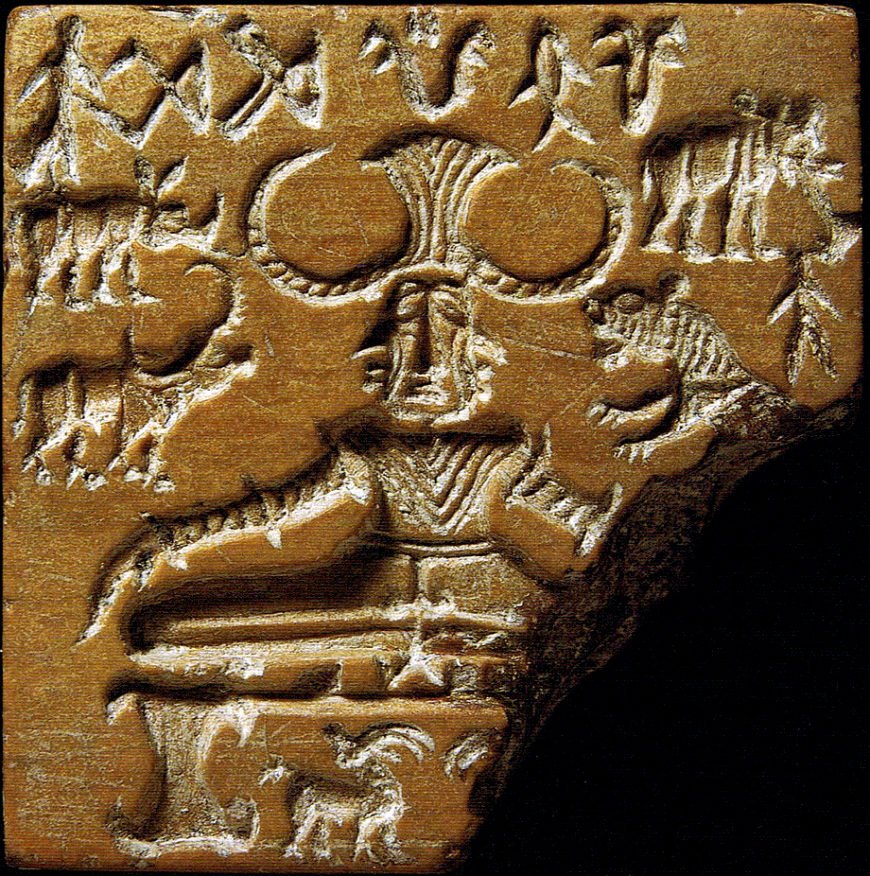
Further visits by Alexander Burnes and Alexander Cunningham in the mid-1800s deepened interest. Cunningham’s discovery of a seal with a bull and a mysterious inscription hinted at a civilization far older than expected.
The breakthrough arrived in 1920 when Daya Ram Sahni, under the leadership of Sir John Marshall, led formal excavations at Harappa. One year later, similar remains surfaced 590 km away at Mohenjo-daro, named the “Mound of the Dead” because of skeletons found during excavation.
By 1924, Marshall announced to the world the discovery of an ancient urban civilization along the Indus River. Harappa and Mohenjo-daro joined Mesopotamia, Egypt, and China as one of the four great ancient civilizations.
A Blueprint for Modernity: Astonishing Urban Planning
Excavations revealed a city design far ahead of its time. Streets followed a grid pattern, houses used standardized baked bricks, and structures were divided into two major sectors:
Upper Mount (Citadel)
This elevated zone contained public buildings, warehouses, meeting areas, and possibly elite residences. Boundary walls protected it from floods and wild animals.
Lower Mount (Residential Town)
This area housed the general population. Homes included private bathrooms connected to a sophisticated drainage network. Wide streets divided housing blocks, showcasing meticulous city planning.
Revolutionary Drainage System
The Harappans engineered one of the world’s earliest underground drainage systems, complete with soak pits and covered channels. Modern cities still struggle to match such sanitation standards.
Water Management Wonders
- The Great Bath at Mohenjo-daro – a massive brick tank used for ritual purposes.
- Wells and reservoirs, especially in Dholavira, for storing rain and floodwater.
Their civic sense was remarkable. Archaeologists found dustbins along streets and public signboards reflecting a conscious effort toward cleanliness.
A Peaceful and Prosperous Society
One striking feature is the absence of kings, palaces, armies, or warfare. No large-scale weapons or battle scenes appear in the archaeological record. This suggests a cooperative and peaceful social structure.
Economic Strength
Agriculture:
The civilization thrived on wheat, barley, pulses, mustard, and spices. Remarkably, Harappans were the first people to grow and use cotton.
Trade:
They engaged in long-distance trade with Mesopotamia, known there as Meluha. Exports included cotton, timber, beads, gemstones, and luxury items. Their use of seals, weights, and measures ensured trade accuracy.
Cultural and Artistic Excellence
Artifacts reveal a rich artistic life:
- The iconic Dancing Girl bronze statue.
- Beautiful jewelry crafted in gold, silver, and precious stones.
- Terracotta toys, figurines, and pottery.
Harappans possessed advanced skills in metalwork, bead-making, and stone carving.
The Great Enigma: The Undeciphered Indus Script
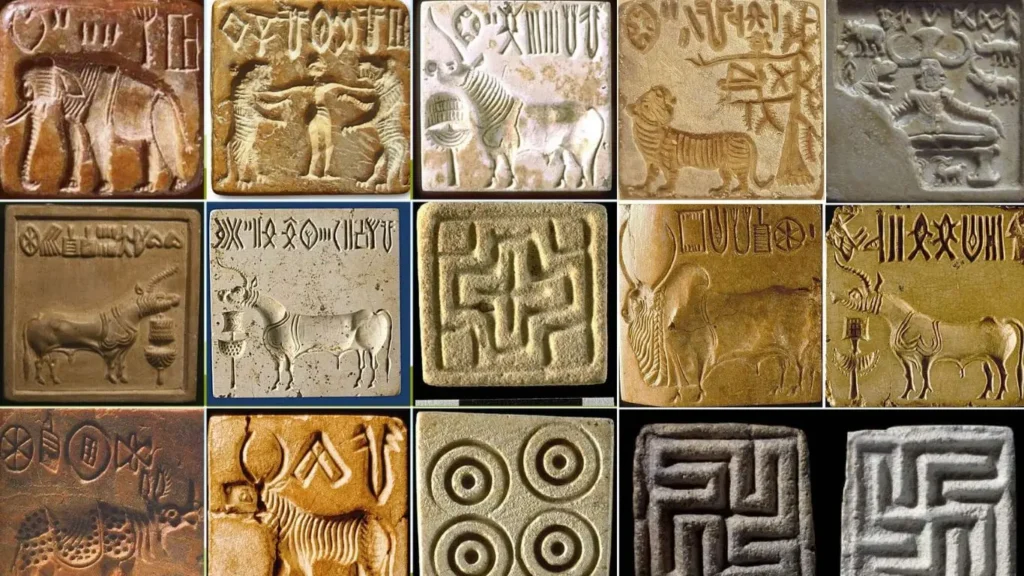
Thousands of seals and tablets contain short inscriptions accompanied by animal symbols, including bulls, elephants, and rhinoceroses.
However, the Indus script remains undeciphered, even after 100 years of intense study. The lack of a bilingual “Rosetta Stone” prevents breakthroughs. Historians believe the script was written right to left, based on the alignment of symbols.
Why Is It So Hard to Decode?
- Inscriptions are very short.
- Over 400 symbols exist, suggesting a logosyllabic system similar to early Chinese.
- No long texts or decipherable references exist.
- The script appears on seals just 2.5–5 cm wide.
Theories link the script to Dravidian, Proto-Sanskrit, or a symbolic non-linguistic code. None are proven.
Tamil Nadu even announced a cash reward for decoding the script. Such efforts highlight the global excitement surrounding this ancient mystery.
The Mysterious Disappearance: Theories of a Sudden Decline
The decline began around 1900 BCE during the Late Harappan phase. Gradually, cities stopped following standardized construction rules, drainage systems deteriorated, and trade with Mesopotamia collapsed.
Key Theories of Decline
1. Climate Change & Drought
Monsoons weakened, rivers dried up, and frequent crop failures caused economic collapse. Many residents likely migrated eastward toward the Ganges plains.
2. Natural Disasters
Floods and earthquakes repeatedly devastated major cities. Mohenjo-daro was rebuilt at least nine times. Persistent destruction weakened urban life.
3. Epidemics
Some believe disease outbreaks decimated communities, leaving abandoned towns buried in time.
4. Aryan Invasion/Migration Theory
An old theory suggests that invaders from Central Asia overpowered the peaceful Harappans. However, this theory is debated and lacks solid evidence.
By 1300 BCE, the civilization had faded. Modern scholars continue to debate its final chapter.
Conclusion: A Civilization Ahead of Its Time
The Indus Valley Civilization remains one of humanity’s greatest achievements. Its thoughtful urban design, clean water systems, and peaceful society demonstrate a sophistication unmatched for its era. Its undeciphered script and sudden decline only deepen its allure.
Despite being discovered a century ago, many secrets still lie buried. Future research and technology may reveal truths that reshape world history once again.