Introduction
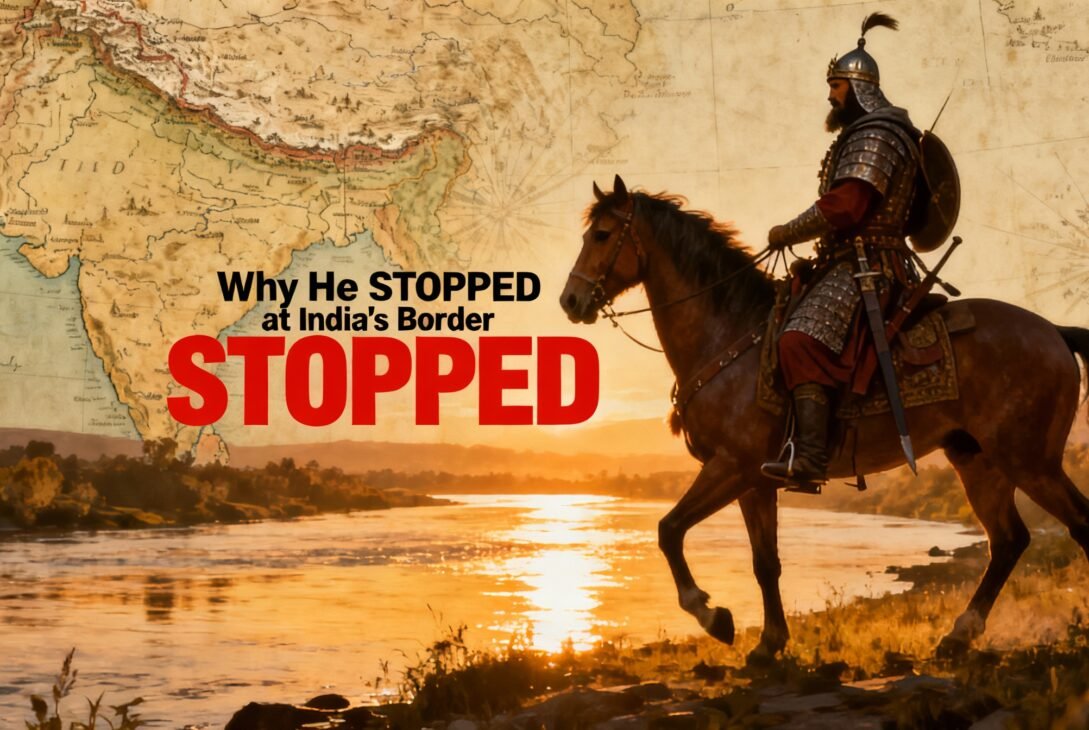
In 1221, Genghis Khan stood at the edge of the Indus River. His army had crushed the Khwarazmian Empire, and India—the richest land of that era—was only a single river crossing away.
Yet he did not attack.
This moment created a major historical mystery: Why did Genghis Khan not invade India?
To understand the answer, we must explore his early life, his motivations, and the turning point he faced on that fateful day.
A Childhood Forged in Pain and Revenge
Genghis Khan, born as Temujin, grew up surrounded by betrayal and violence. His father was poisoned. His family was abandoned. His wife Börte was kidnapped.
These events shaped him into a leader who fought not for wealth but for revenge, power, and survival.
In 1206, he united the Mongol tribes and became the “Universal Ruler.” From that moment onward, every war he fought had a purpose.
He never attacked aimlessly. He always attacked with intention.
A Pattern of Purpose: His Wars Were Never Accidental
1. Western Xia & Jin Dynasty — Revenge for Oppression
These Chinese empires had weakened Mongol tribes for centuries. Genghis Khan burned cities, crushed armies, and took their lands to break their dominance.
2. Kara Khitai — Retaliation for Murder
When the Kara Khitai killed a Mongol prince, Genghis Khan eliminated the entire empire in retaliation.
3. Khwarazmian Empire — The Ultimate Insult
Genghis sent 500 peaceful merchants. The Shah executed them.
He sent three ambassadors. The Shah killed one and humiliated the others.
Genghis responded by destroying the Khwarazmian Empire completely.
This chain of vengeance led directly to the borders of India.
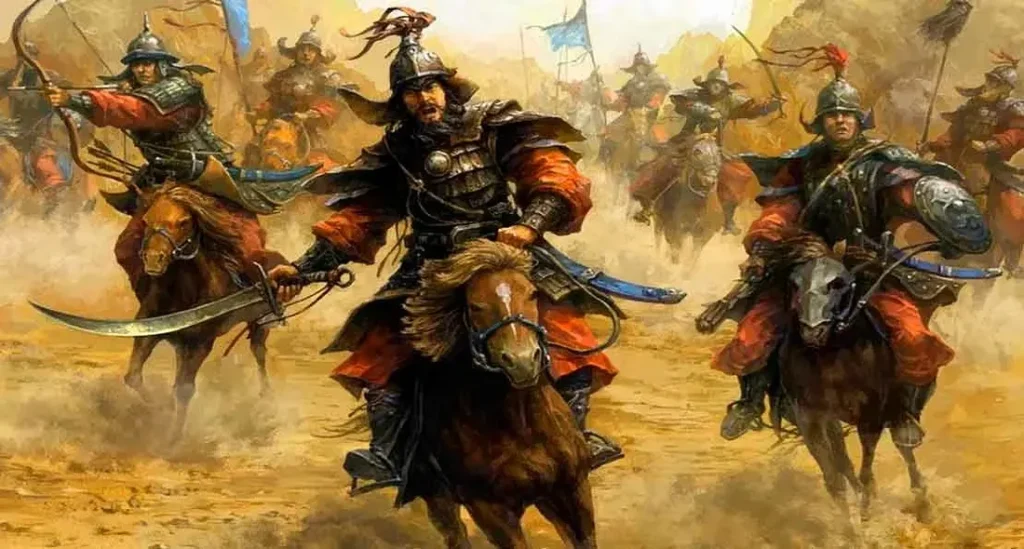
The Indus River Standoff: A Victory Followed by a Choice
After defeating Jalal ad-Din near the Indus River, Genghis Khan watched the prince leap into the river and flee toward India.
At this time, the Delhi Sultanate under Iltutmish was politically unstable. The ruler lacked major military experience.
One command from Genghis Khan could have opened the gates to India.
However, he turned back.
Why did history’s greatest conqueror retreat at the border of the world’s richest land?
The Theories: Why Genghis Khan Did Not Invade India
1. The Omen Theory: A Divine Warning
According to one account, Genghis dreamed of a mystical creature blocking his path and warning him not to enter India.
Since he believed strongly in omens, Tengrism, and spiritual signs, some historians argue he took this as a divine message.
However, this theory alone cannot fully explain his withdrawal.
2. Climate & Geography: A Practical Concern
India’s heat, dense forests, and unpredictable terrain differed greatly from Mongolia’s cold steppes.
Moreover, his army was exhausted after years of continuous war.
Yet later conquerors like Timur and Babur, also from cold regions, successfully invaded India.
Therefore, this explanation is only partially convincing.
3. The Political Strategy Theory: Iltutmish’s Smart Move
This theory is especially strong.
Genghis Khan attacked only when he had a clear reason—insult, betrayal, or revenge.
Sultan Iltutmish understood this pattern.
Thus, when Jalal ad-Din sought asylum, Iltutmish rejected him.
No asylum meant no provocation.
No provocation meant no attack.
A single strategic decision by the Delhi Sultan saved India.
4. The Strategic Priority Theory: A Rebellion Back Home
This is the most historically accurate reason.
While Genghis fought in Central Asia, the Western Xia—a kingdom he had previously defeated—rebelled.
To Genghis, rebellion within his empire was unforgivable.
Personal loyalty mattered more than foreign conquest.
So he turned back, marched to China, and annihilated Western Xia.
He died in 1227 before he ever reconsidered India.
Conclusion: Why He Truly Never Invaded India
When all theories are combined, the real answer becomes clear:
- He had no personal revenge against India.
- India did not provoke him.
- A rebellion threatened his core empire.
- His army required rest.
- And Iltutmish’s diplomacy eliminated any justification for war.
Genghis Khan turned away because conquering India did not match his deepest motivation—revenge.
This single decision changed the fate of the Indian subcontinent forever.