Introduction: When India Lost Its Nuclear Visionary
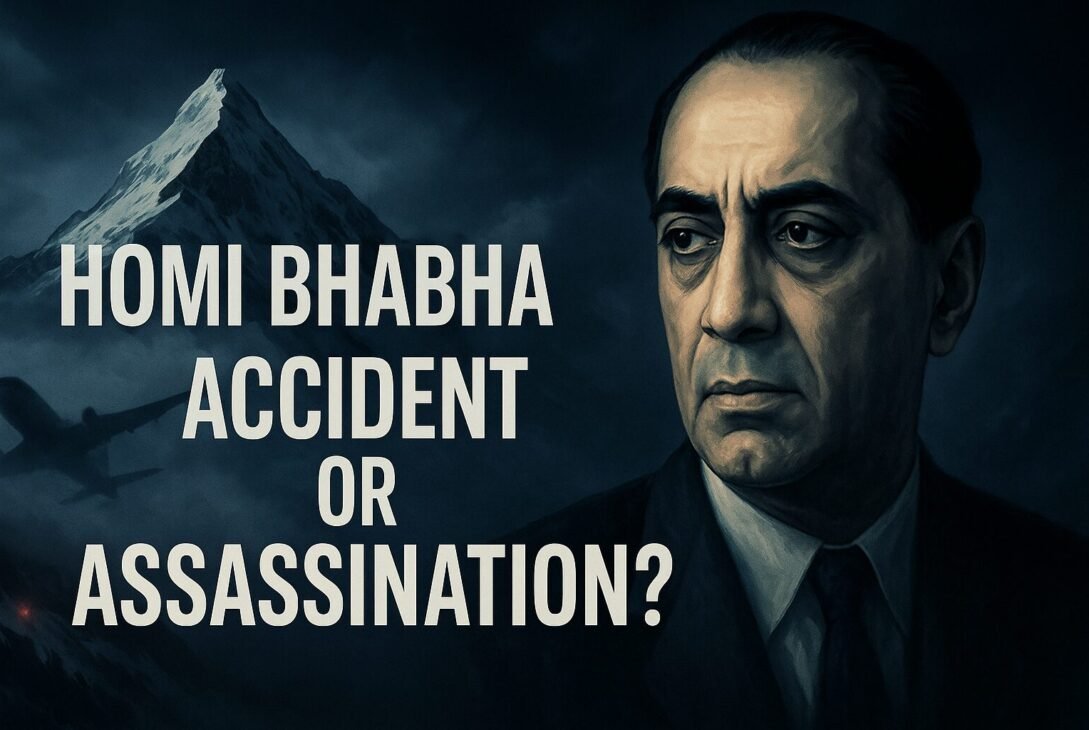
On January 24, 1966, Air India Flight 1001 crashed into Mont Blanc in the Alps. All 117 passengers died instantly. Among them was Dr. Homi Jehangir Bhabha, the father of India’s nuclear program.
The Homi Bhabha death conspiracy remains one of India’s greatest unsolved mysteries. Just 13 days earlier, Prime Minister Lal Bahadur Shastri had died mysteriously in Tashkent. Two sudden deaths within two weeks raised serious questions.
Was this merely a tragic accident? Or did foreign powers conspire to stop India’s nuclear ambitions? This article explores the complete story, evidence, and conspiracy theories surrounding this incident.
Who Was Dr. Homi Jehangir Bhabha?
Early Life and Education
Dr. Homi Bhabha was born on October 30, 1909, in Mumbai. He came from a wealthy Parsi family. His father, Jehangir Hormusji Bhabha, was a renowned lawyer.
His family had connections with the famous Tata family. Bhabha’s aunt Meherbai married Sir Dorab Tata, the eldest son of Jamsetji Tata. These connections would later prove crucial for India’s nuclear program.
Bhabha completed his primary education at Cathedral and John Connon School in Mumbai. He showed exceptional interest in science and mathematics from childhood. Therefore, he pursued higher studies at Elphinstone College.
Cambridge Years: A Physicist Is Born
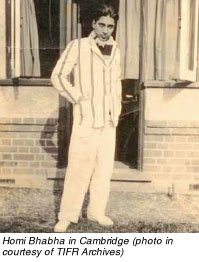
In 1927, Bhabha went to England for further studies. He joined Gonville and Caius College at Cambridge University. Initially, he studied mechanical engineering to satisfy his father’s wishes.
However, Bhabha’s heart lay in theoretical physics. He wrote a letter to his father expressing his true passion. Consequently, his father agreed but set one condition. Bhabha had to pass the Mechanical Tripos with a first division.
Bhabha exceeded expectations brilliantly. He passed both the Mechanical and Mathematics Tripos with a first division. Moreover, he received several prestigious studentships during this period.
Groundbreaking Research
In 1932, Carl Anderson discovered the positron. This discovery fascinated Bhabha immensely. As a result, he dedicated his life to high-energy physics research.
Bhabha published his first paper on electron showers in 1933. The paper explained how electron showers absorb cosmic radiation. This work brought him international recognition at a young age.
He worked with legendary scientists during his research. These included Ernest Rutherford, Niels Bohr, Chadwick, and Enrico Fermi. Their guidance helped shape his scientific thinking.
In 1935, Bhabha earned his doctorate from Cambridge University. His thesis focused on “The Absorption of Cosmic Radiation.” Furthermore, he published over 50 research papers on high-energy physics throughout his career.
Return to India: Building a Nuclear Foundation
World War II Changes Everything
In 1939, the Royal Society of Manchester offered Bhabha a research position. However, he decided to visit India for an annual vacation first. Meanwhile, World War II broke out in Europe.
The war prevented Bhabha from returning to England. This unexpected turn became India’s blessing. He joined the Indian Institute of Science (IISc) in Bangalore as a professor.
At IISc, he worked alongside Nobel Prize winner Dr. C.V. Raman. Additionally, he established a separate department for cosmic ray research. This initiative helped nurture new scientific talent in India.
Meeting Vikram Sarabhai
At IISc, Bhabha met another brilliant scientist, Vikram Sarabhai. Sarabhai had also returned from Cambridge due to the war. Their friendship would transform India’s scientific landscape forever.
Both scientists shared a passion for cosmic ray research. Therefore, they collaborated closely on multiple projects. Their partnership continued until Bhabha’s tragic death.
C.V. Raman greatly admired Bhabha’s talents. He once compared Bhabha to Leonardo da Vinci. The comparison was apt because Bhabha excelled in both science and the arts.
Founding TIFR
In 1945, Bhabha proposed establishing a fundamental physics research institute. He approached his friend J.R.D. Tata for funding. Tata agreed enthusiastically to support this vision.
Consequently, the Tata Institute of Fundamental Research (TIFR) was established in 1945. Bhabha became its first director. This institution became the foundation of India’s nuclear program.
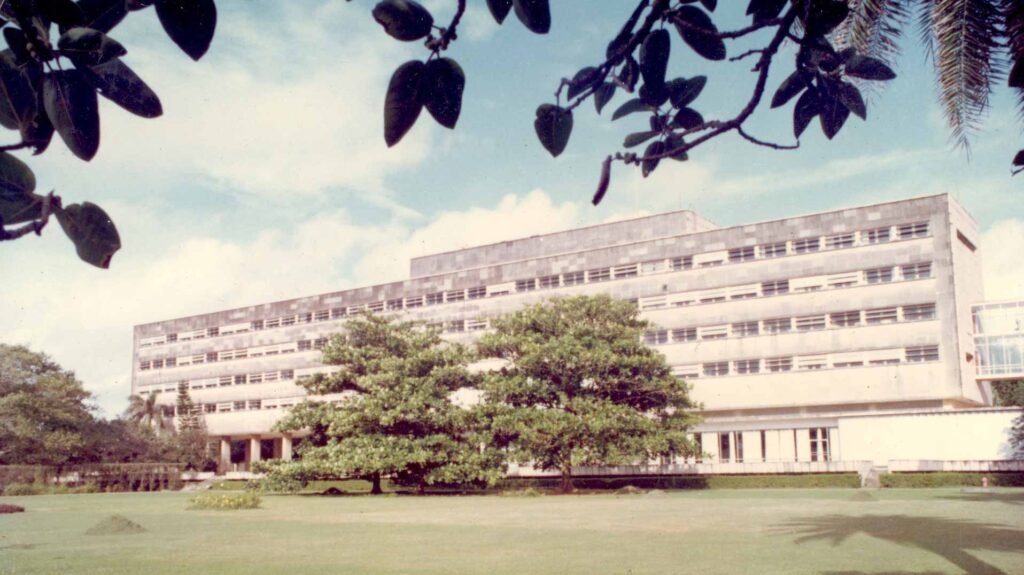
Source: Tata Group
India’s Nuclear Journey Begins
Post-Independence Challenges
India gained independence in 1947. Pandit Jawaharlal Nehru became the first Prime Minister. However, the new nation faced enormous challenges in meeting basic needs.
Nuclear energy development seemed like a distant dream then. Moreover, the Cold War was intensifying between the Soviet Union and America. Nehru adopted a non-alignment policy for India.
Additionally, Nehru opposed nuclear weapons on global platforms. His pacifist views contradicted nuclear weapons development. Nevertheless, Bhabha understood India’s future security needs.
Establishing the Atomic Energy Commission
In 1948, Bhabha wrote to Nehru suggesting a dedicated nuclear research institute. His vision convinced the Prime Minister eventually. Therefore, the Atomic Energy Commission (AEC) was established in October 1948.
Bhabha became the commission’s first chairman. This was possible because of his close friendship with Nehru. Bhabha addressed Nehru as “My Dear Bhai” in letters.
Indira Gandhi later confirmed their friendship in Parliament. She revealed that Bhabha often called her father late at night. The two would discuss science for hours despite Nehru’s busy schedule.
The Three-Stage Nuclear Program
Bhabha designed India’s visionary three-stage nuclear program. He considered India’s long-term energy needs carefully. Moreover, India has over 500,000 tons of thorium reserves.
His thorium-based nuclear program was revolutionary. The government quickly adopted this futuristic plan. Today, India leads the world in thorium research because of Bhabha’s vision.
Building India’s First Reactor
India needed enriched uranium for nuclear reactors. However, India lacked uranium enrichment technology then. Therefore, Bhabha sought help from his Cambridge friend John Cockcroft.
Cockcroft worked with the UK Atomic Energy Authority. Consequently, an agreement was signed between Britain and India. Britain began supplying enriched uranium to India.
Additionally, Canada agreed to help establish a 40-megawatt research reactor. As a result, India developed its first nuclear reactor in August 1956. This reactor was named “Apsara.”
The 1962-64 Turning Point
China’s Betrayal and Attack
In 1962, China attacked India treacherously. The attack came under the guise of “Hindi-Chini Bhai-Bhai” friendship. China captured 38,000 square kilometers of Indian territory.
India suffered a humiliating defeat in this war. The loss exposed India’s military weaknesses starkly. Consequently, India’s security situation became extremely precarious.
In October 1964, China successfully tested its first nuclear bomb. This development created an even greater threat to India. The two incidents forced India to reconsider its nuclear policy.
Bhabha’s Bold Declaration
Dr. Bhabha couldn’t remain silent anymore. He made a historic statement on All India Radio. He declared that nuclear bombs were affordable for India.
Moreover, Bhabha stated that making 50 atomic bombs would cost only 10 crores. He confidently promised to deliver nuclear weapons within 18 months if permitted.
However, Prime Minister Nehru had died by then. Lal Bahadur Shastri had become the new Prime Minister. Initially, Shastri wasn’t enthusiastic about nuclear development.
Shastri Changes His Mind
The 1965 Indo-Pak war changed everything. Pakistan attacked India in August 1965 with American support. America was supplying advanced weapons, aircraft, and tanks to Pakistan.
Pakistan believed India was weak after the 1962 China defeat. However, India proved Pakistan wrong decisively. Pakistan had to agree to a ceasefire in September 1965.
Nevertheless, this war convinced Shastri of the necessity of nuclear weapons. In December 1965, he personally asked Bhabha to accelerate the nuclear program. Shastri even offered Bhabha a cabinet position.
However, Bhabha preferred serving India as a scientist. He had already promised an 18-month timeline for nuclear weapons. Moreover, Shastri now fully supported his vision.
Therefore, India could have become a nuclear power by late 1966 or early 1967. But fate had different plans entirely.
January 1966: Two Mysterious Deaths
Shastri’s Suspicious Death
On January 11, 1966, Prime Minister Lal Bahadur Shastri died mysteriously. He was in Tashkent for peace talks with Pakistan. The circumstances surrounding his death remain controversial even today.
Shastri’s death shocked the entire nation. Just days earlier, he had supported Bhabha’s nuclear ambitions fully. His sudden demise created a leadership vacuum in India.
The Fatal Flight
Bhabha was scheduled to attend an Atomic Energy conference in Vienna. The conference was organized by the International Atomic Energy Agency’s Scientific Advisory Committee. It was scheduled for late January 1966.
There was no direct flight from Bombay to Vienna then. Travelers had to change flights in Geneva, Switzerland. Therefore, Bhabha boarded Air India Flight 1001 on January 22, 1966.
This flight was named “Kanchenjunga.” It was scheduled to fly from Mumbai to London via Beirut and Geneva. Bhabha planned to disembark in Geneva and take another flight to Vienna.
The Crash: January 24, 1966
The Accident
On January 24, 1966, at 7:02 AM, tragedy struck. The plane entered French airspace over the Alps. Suddenly, it crashed into Mont Blanc, the highest peak.
All 117 passengers and crew members died instantly. Dr. Homi Bhabha was among the victims. He was only 56 years old at the time.
The news devastated India completely. Bhabha’s death came just 13 days after Shastri’s mysterious demise. The timing seemed too coincidental to many people.
The Investigation Begins
France took responsibility for investigating the crash. The accident occurred in French airspace. Therefore, French authorities formed a rescue team immediately.
However, the rescue team found nothing initially. They couldn’t locate the plane’s wreckage or black box. Moreover, they couldn’t recover any passenger bodies either.
According to officials, the wreckage had already sunk into glaciers. Soon afterward, France halted the operation, citing bad weather. This decision raised immediate suspicions.
Déjà Vu: The 1950 Crash
Strangely, this crash occurred at the exact same location. In November 1950, another Air India plane, “Malabar Princess,” had crashed there. That wreckage was also never fully recovered.
Both crashes at the identical location seemed beyond coincidence. Moreover, both investigations ended without conclusive findings. These similarities deepened public skepticism significantly.
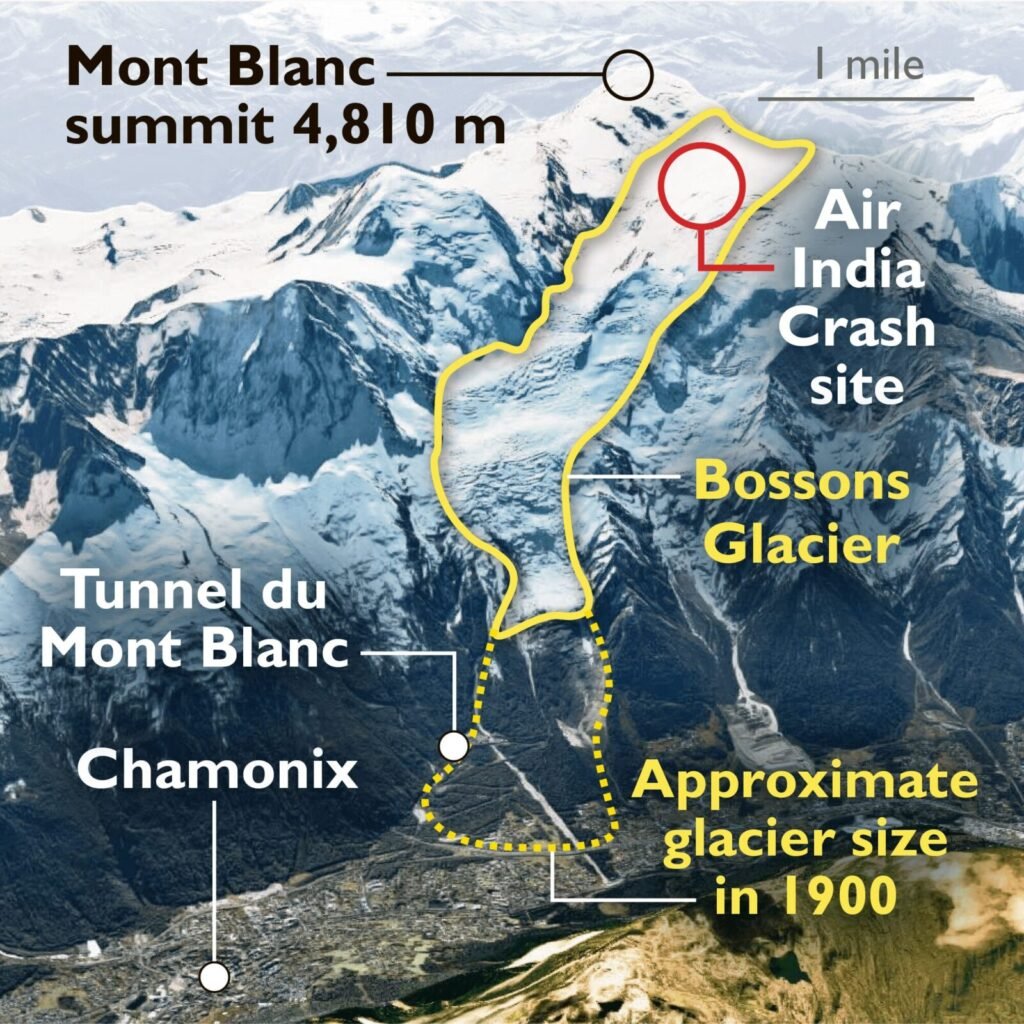
Source: The Times
Official Explanation and Doubts
France’s Report
France’s investigation report blamed the plane’s VOR system. VOR helps pilots determine their position, direction, and altitude. According to authorities, the VOR malfunctioned that day.
The pilot reported being at 19,000 feet two minutes before crashing. This height was 3,000 feet above Mont Blanc’s highest peak. Therefore, the control room cleared the plane’s position.
However, investigators claimed the pilot made a critical error. He mistakenly believed he had crossed the highest peak. Consequently, he began descending the aircraft prematurely.
This confusion caused the plane to crash into the mountains. At least, that’s what the official report concluded.
Why People Didn’t Believe It
Many people questioned this explanation immediately. How could a plane flying 3,000 feet above the peak crash just two minutes later? The timeline didn’t make logical sense.
Moreover, Prime Minister Shastri had died mysteriously just 13 days earlier. Only a month before, Shastri had accelerated Bhabha’s nuclear program. The timing raised serious red flags.
Additionally, both deaths eliminated India’s nuclear weapons leadership completely. No one believed this was a mere coincidence. Suspicions of a larger conspiracy emerged quickly.
The French Journalist’s Discovery
Philippe Rials Takes Action
Philippe Rials was an editor at France’s public broadcaster ORTF. He didn’t believe his government’s official explanation. Something felt wrong about the entire investigation.
His unease kept growing stronger daily. Finally, he decided to take matters into his own hands. Therefore, he sent his camera crew to Mont Blanc from the Italian side.
Shocking Findings
In the 1843 magazine, Rials published his investigation report. His team had discovered a piece of plane wreckage there. Surprisingly, this piece had “June 1, 1960” written on it.
However, Kanchenjunga only entered service in 1961. Additionally, they found a yellow-colored piece of the plane’s front section. This color didn’t match Kanchenjunga’s original color scheme.
These discoveries completely contradicted the French government’s report. Consequently, accusations of a cover-up intensified dramatically. People demanded answers about what really happened.
The Second Investigation Attempt
ORTF sent another team to search for the black box. However, France’s Interior Minister learned about this mission. He immediately called ORTF’s head and ordered the team’s recall.
The team had to descend under government pressure. But one member broke his silence afterward. He openly declared that the plane didn’t crash into the mountain.
Instead, he claimed Air India’s flight collided with another aircraft mid-air. According to him, this second aircraft’s wreckage was what they found. His statement shocked everyone completely.
The French government immediately confiscated all discovered items. Moreover, they never disclosed any information about these findings. The cover-up became increasingly obvious to observers.
[Lal Bahadur Shastri Death Mystery – Tashkent Files]
The CIA Connection: Conversations with the Crow
Robert Crowley’s Revelations
In 2008, a book titled “Conversations with the Crow” was published. It contained shocking claims about Bhabha’s death. The book implicated America’s CIA in the incident.
The book documented conversations between former CIA officer Robert Crowley and journalist Gregory Douglas. Crowley was known as “Crow” within the CIA. He spent his entire career in the Directorate of Plans.
This directorate was nicknamed the “Department of Dirty Tricks.” Crowley and Douglas shared deep personal bonds. Therefore, Crowley revealed many classified secrets to Douglas.
Before dying, Crowley gave Douglas two boxes filled with secret documents. He instructed Douglas to publish them only after his death. Douglas waited eight years before publishing this book.
The Telephone Conversation
The book included a July 5, 1996, telephone conversation between them. In this call, Crowley made explosive allegations about Bhabha’s death.
Crowley stated that US-India relations were poor in the 1960s. India had begun working on its nuclear bomb then. Moreover, India was moving closer to the Soviet Union.
According to Crowley, Homi Bhabha was the mastermind behind India’s nuclear ambitions. He possessed the complete capability to build nuclear weapons. Additionally, Bhabha had declared that no power could stop India.
CIA’s Alleged Role
Crowley claimed that India’s growing Soviet ties worried America greatly. Moreover, Bhabha’s leadership made India’s nuclear capability seem inevitable. Therefore, the CIA decided to eliminate him.
According to Crowley, the CIA planted a bomb in Flight 1001’s cargo hold. The bomb killed Bhabha and all other passengers aboard. Furthermore, Crowley claimed the CIA also killed Lal Bahadur Shastri in Tashkent.
These allegations carried weight because of the CIA’s proven track record. The CIA had assassinated several important personalities in other countries previously. For example, they killed Italian oil trader Enrico Mattei.
Mattei was murdered because he funded Italy’s first nuclear reactor. Therefore, people found Crowley’s claims about Bhabha believable. However, Crowley had already died by 2008.
Consequently, his claims couldn’t be verified directly. The matter gradually faded from public attention again.
2017: New Evidence Emerges
Daniel Roche’s Investigation
In 2017, French businessman and sportsman Daniel Roche investigated the crash site. He had a deep interest in air crash investigations. Therefore, he traveled to the Alps with his team.
Roche conducted extensive searches in the icy mountains. Soon, his team discovered several significant items. These included seat belts, cockpit pieces, a flare pistol, and a camera.
Additionally, they found a bag filled with documents. Moreover, they located Kanchenjunga’s engine within a 25-kilometer radius. These discoveries validated previous conspiracy theories significantly.
Collision Theory Confirmed
According to Roche, Kanchenjunga crashed after colliding with another aircraft. This theory matched Philippe Rials’ earlier findings perfectly. However, French authorities repeatedly obstructed Roche’s investigation.
Roche publicly accused French officials of blocking his work. He believed they were hiding crucial information deliberately. Nevertheless, his findings added substantial evidence to conspiracy theories.
India’s Nuclear Program After Bhabha
Vikram Sarabhai Takes Charge
After Bhabha’s death, the Indian government renamed the Atomic Research Center. It became the Bhabha Atomic Research Centre (BARC) in his honor. This tribute recognized his immense contributions.
Bhabha’s closest friend, Vikram Sarabhai, became the new AEC chairman. He worked alongside distinguished nuclear scientists Raja Ramanna and Homi Sethna. Together, they continued Bhabha’s unfinished mission.
Operation Smiling Buddha
India successfully tested its first nuclear device on May 18, 1974. The test occurred in Pokhran, Rajasthan, under “Operation Smiling Buddha.” This achievement fulfilled Bhabha’s 1964 promise posthumously.
India proved its nuclear capability to the world. Moreover, the test demonstrated that Bhabha’s vision was achievable. His sacrifice had not been in vain ultimately.
India’s Nuclear Status Today
Today, India possesses approximately 180 nuclear weapons. These weapons strengthen India’s national security significantly. Moreover, they deter enemies from attacking India recklessly.
Bhabha’s futuristic vision made India a nuclear power. Without his early initiatives, India might still struggle with nuclear technology. His legacy continues to protect India’s sovereignty today.
Conclusion: An Unsolved Mystery
The Homi Bhabha death conspiracy remains unsolved even after 58 years. Multiple theories exist, but concrete proof remains elusive. Was it a tragic accident or a calculated assassination?
Several factors support the conspiracy theory. The timing of Shastri’s death seems too coincidental. Moreover, both deaths eliminated India’s nuclear leadership completely.
Additionally, France’s incomplete investigation raises serious questions. Philippe Rials’ and Daniel Roche’s findings contradict official reports. Furthermore, Robert Crowley’s CIA allegations add another dimension.
However, without definitive proof, the truth remains buried. Perhaps it lies frozen in Mont Blanc’s glaciers forever. Nevertheless, Bhabha’s legacy lives on in India’s nuclear strength.
His vision transformed India from a vulnerable nation into a nuclear power. Today, India commands respect globally because of its foresight. Therefore, Dr. Homi Jehangir Bhabha will always remain India’s nuclear father.
What do you think about the Homi Bhabha death conspiracy? Was it an accident or an assassination? Share your thoughts in the comments below.