Introduction: The British Prime Minister’s Shocking Admission
Nine years after India’s independence, a remarkable conversation took place in 1956. British Prime Minister Clement Attlee visited India and met with West Bengal Governor P.B. Chakraborty. Their discussion revealed a startling truth about Indian independence.
Chakraborty boldly asked Attlee what really made the British leave India. Attlee’s response came in just three words: “Azad Hind Fauj” (Indian National Army). The force led by none other than Netaji Subhash Chandra Bose.
Attlee claimed Bose’s INA had shaken British authority so severely that their grip began weakening. Chakraborty then asked about Gandhi’s contribution to independence. Attlee laughed and replied: “Minimal.”
Major General Dr. G.D. Bakshi documented this incident in his book “Bose: An Indian Samurai.” This revelation raises profound questions. Did Bose contribute more to independence than Gandhi? Should Netaji as Prime Minister have led independent India?
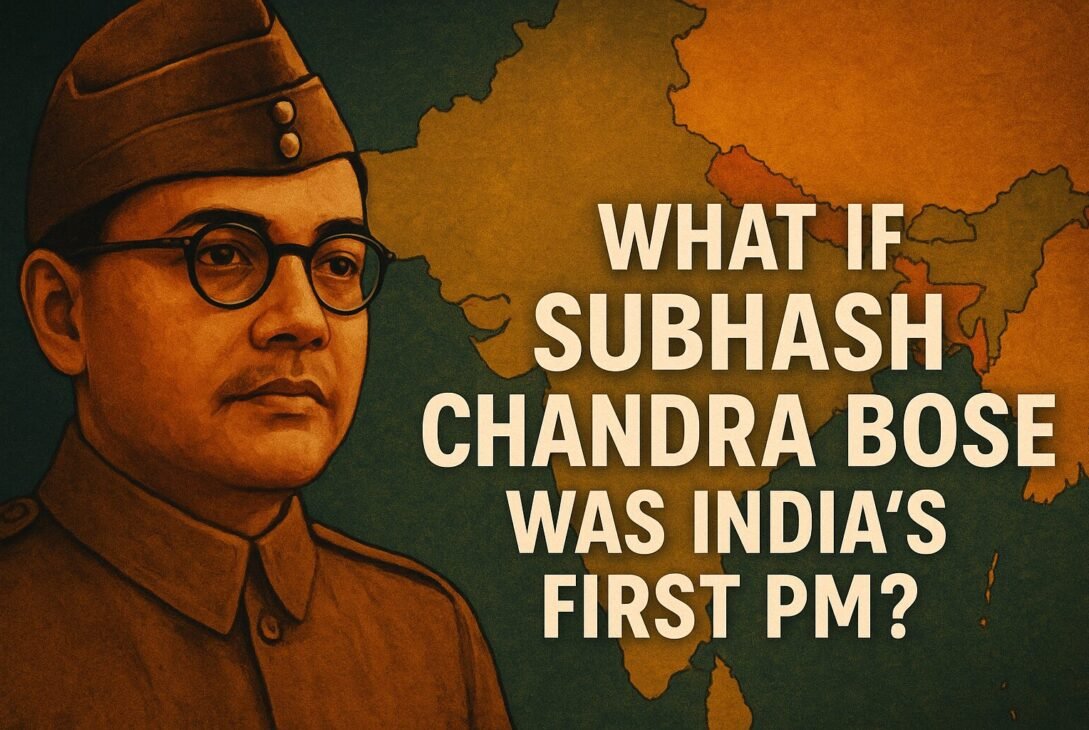
In fact, many historians argue that Bose was already the first Prime Minister of independent India, though this claim remains hotly debated. More intriguingly, what if Bose had truly become PM of undivided India? How different would our nation be today?
Let’s explore this fascinating alternate history India scenario through historical evidence and thoughtful speculation.
The Attlee Claim: Did Bose Really Force the British Out?
The INA’s Revolutionary Impact
The conversation between Attlee and Chakraborty wasn’t mere diplomatic courtesy. Historical evidence supports the INA’s profound impact on British colonial authority. The trials of INA officers in 1945-46 sparked massive protests across India.
British Indian Army soldiers began questioning their loyalty. Moreover, naval mutinies broke out in 1946. The British realized they could no longer rely on Indian soldiers to maintain control. This military defection proved far more threatening than peaceful protests.
Why Gandhi’s Role Was “Minimal”
Attlee’s controversial assessment of Gandhi deserves examination. The British weren’t philosophically persuaded by non-violence. Economic exhaustion from World War II certainly weakened Britain. However, the real terror came from military rebellion.
The INA demonstrated that Indian soldiers would fight against the British Empire. This psychological shift proved devastating to colonial confidence. Nevertheless, Gandhi’s moral authority united the independence movement politically. Both contributions mattered—just differently.
Also Read: Indian National Army’s Role in Independence Movement
Bose’s Azad Hind Government: India’s First Provisional Government
The Government Nobody Talks About
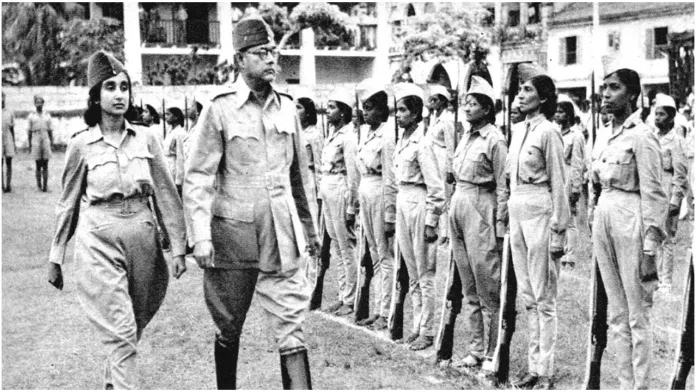
In 1943, with Japanese assistance, Subhash Chandra Bose established something extraordinary. The Azad Hind Government (Provisional Government of Free India) was formed with captured British Indian Army soldiers. Bose traveled extensively, inspiring overseas Indians to join the freedom struggle.
He promised Indians they would set foot on free Indian soil within one year. Before that, he fought two fierce battles against the British alongside Japanese forces.
The Andaman and Nicobar Gift
In recognition of his efforts, Japan gifted Bose the Andaman and Nicobar Islands. This allowed Netaji to physically establish his government on Indian territory. These islands became the first liberated part of India.
Here, Bose hoisted the tricolor flag under free skies for the first time. The Azad Hind Government was fully functional with remarkable infrastructure.
A Complete Government Structure
Bose served simultaneously as President, Prime Minister, and Foreign Minister. His government issued its own currency. It operated postal services and radio stations. The administration even established its own court system.
Nine major countries officially recognized the Azad Hind Government:
- Japan
- Italy
- Germany
- Croatia
- Manchuria
- Burma
- Philippines
- Thailand
- Ireland
This international recognition gives credibility to claims that Bose was technically India’s first Prime Minister. His government-controlled territory had diplomatic relations and administered services—all hallmarks of statehood.
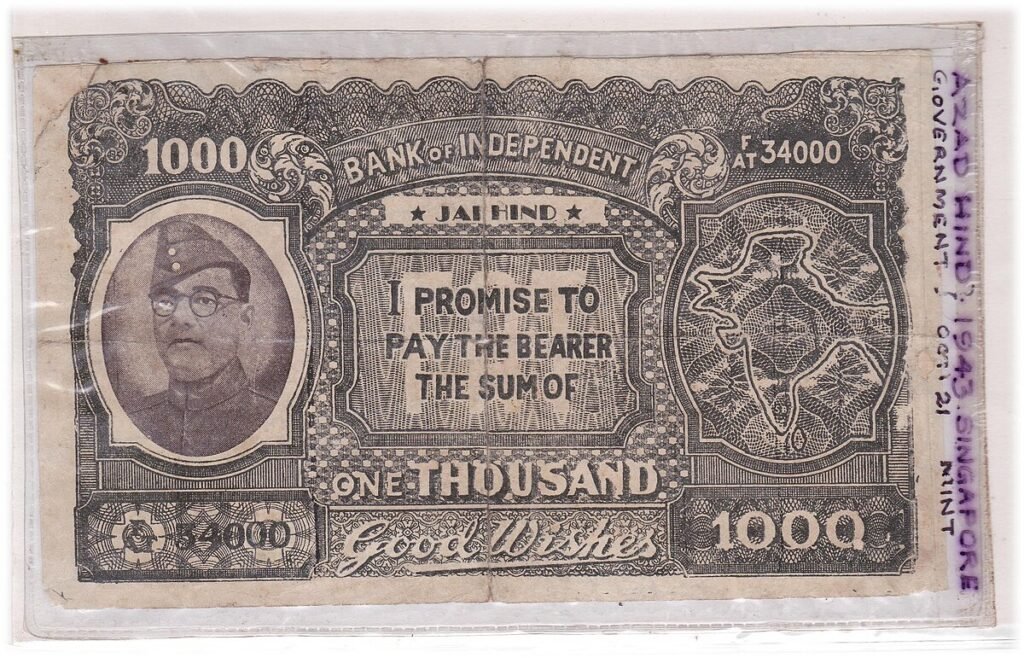
Source: Wikimedia Commons
How Bose’s Foreign Policy Could Have Changed India-China Relations
The 1938 China Connection
The alternate history India scenario becomes fascinating when examining potential China relations. In 1938, China struggled with World War II devastation. They sought help from India and the Indian National Congress.
Was Congress President at that time? Subhash Chandra Bose himself. On June 12, 1938, Bose declared an “All India China Day.” He rallied Indians nationwide to collect funds for China’s assistance.
Bose’s Medical Mission to China
Netaji sent two teams with ambulances and doctors to China. This humanitarian gesture established strong personal bonds between Bose and Chinese leaders. These excellent relations directly resulted in China becoming one of nine nations recognizing the Azad Hind Government.
Preventing the 1962 War
Given this historical friendship, many historians speculate differently about Bose vs Nehru’s foreign policy. If Bose had become Prime Minister, India-China relations might have remained warm. The catastrophic 1962 Indo-China War might never have occurred.
Border tensions that plague both nations today could have been avoided entirely. Bose’s personal relationship with the Chinese leadership might have fostered peaceful border resolutions. This represents one of the most significant potential changes in the alternate timeline.
Would Partition Have Happened Under Bose?
Bose’s Firm Opposition
According to Azad Hind Fauj Captain Lakshmi Sahgal, Netaji always opposed India’s partition under Bose. He expressed this clearly to both Mahatma Gandhi and Jawaharlal Nehru. Bose warned that partition would worsen India’s situation dramatically.
He predicted that one partition would encourage other separatist demands. His prophecy proved tragically accurate. Today, India faces multiple separatist movements:
- Nagaland’s independence demands
- Punjab’s Khalistan movement
- West Bengal’s Naxalite insurgency
Why Muslims Trusted Bose
Bose might have convinced Muslims against demanding Pakistan. He enjoyed greater popularity among Muslims than other Congress leaders. The reason was simple yet profound.
Bose grew up in Calcutta’s Muslim-majority neighborhoods. He never distinguished between Hindus and Muslims personally. This upbringing shaped his inclusive worldview fundamentally.
The INA’s Muslim Composition
Statistical evidence supports Bose’s cross-community appeal. In 1937, Congress had fewer than 10% Muslim leaders. Meanwhile, the Azad Hind Fauj comprised 40-50% Muslim soldiers. These men joined after hearing Bose’s inspiring speeches.
They believed in his vision of a united India. Consequently, historians argue that Bose alive in 1947 could have prevented partition. Perhaps Pakistan and Bangladesh would today be part of India. The bloody partition massacres might never have occurred.
Bose’s Ideology: Communism, Discipline, and Secularism
The Socialist Vision
If Subhash Chandra Bose first PM, had materialized, India’s governance system would differ dramatically. Democracy and parliamentary rule might not exist as we know them. Instead, India would likely follow communist or socialist principles.
Similar to China, Russia, and East Germany’s systems. Bose himself wrote about this in his book “The Indian Struggle.” He wanted to create a party called “Samyavad” or “Samajavad”—essentially meaning communist union.
Why Communism Appealed to Bose
During World War II, Bose witnessed something impressive. Despite devastation, communist nations like China, Russia, and Germany rebuilt rapidly. Their centralized systems achieved quick recovery and development.
This efficiency attracted Bose more than democratic systems. He believed a strong, centralized authority could modernize India faster.
Not a Dictator Like Hitler
Wait—does this mean Netaji wanted to become a dictator like Hitler or Stalin? Would Indians face authoritarian restrictions like modern China?
Actually, no. While Bose admired communist efficiency, he rejected totalitarian oppression. He consistently advocated for equal social, political, and economic rights for all Indians. Religious freedom remained paramount in his vision.
Secular India Under Bose
In “The Indian Struggle,” Bose clearly stated his vision. He wanted India to become a secular nation. Minorities shouldn’t be treated as second-class citizens. Everyone should contribute equally to national development.
These principles sound democratic and progressive. However, one major difference would emerge.
The Discipline Factor
Indians would likely be far more disciplined under Bose’s leadership. He believed India needed a strong foundational pillar. This required teaching citizens the importance of strict discipline.
People would become more responsible, similar to citizens in countries like Japan. Order and efficiency would characterize Indian society fundamentally.
Risks and Downsides: One-Party Rule and Power Concentration
The Dark Side of the Alternate Timeline
Like every sunrise and sunset, like two sides of every coin, this story has another perspective. A somewhat darker possibility exists in this alternate history India scenario.
If Prime Minister Bose implemented communism, India might face one-party rule. No opposition parties would exist to hold the ruling party accountable. Given Bose’s military values, the armed forces might wield more power than Parliament.
Similar to Stalin’s Russia or Hitler’s military state. Now, I believe Netaji wouldn’t have done this. He would have been an excellent leader. But what about his successors?
The Power Corruption Problem
Who guarantees that future Prime Ministers will follow Bose’s idealistic principles? Concentrating power in one party creates dangerous possibilities. There’s an old saying: “Power corrupts, and absolute power corrupts absolutely.”
What if leaders after Bose harbored wrong intentions? One-party systems make such intentions achievable without checks and balances. This environment could potentially birth an Indian Hitler.
Someone who would tear apart Bose’s secular, united India. This represents the genuine risk in authoritarian systems—even benevolent ones.
Democracy’s Protection
Our current democratic system, despite flaws, provides safeguards. Multiple parties compete. The media scrutinizes the government. Courts provide independent oversight. Citizens can vote out poor leaders.
These protections might not exist in the alternate timeline. Consequently, while Bose himself might have been exemplary, his governmental structure could enable future tyranny.
The Mystery of Bose’s Death: How It Alters History
The Plane Crash That Changed Everything
We can only speculate about Prime Minister Bose’s India because of one tragic event. In 1945, his plane allegedly crashed while traveling from Taiwan to Russia. Official reports claim Bose died in this accident.
However, from 1945 until today, intense debate continues. Many believe Bose didn’t die in the crash. Instead, conspiracy theories suggest he was captured and imprisoned.
The Conspiracy Theories
Some claim Bose was held in a Russian prison camp for years. Entire books document evidence suggesting he survived the crash. These theories remain controversial but persistent.
The mystery represents one of India’s greatest unsolved historical puzzles. If Bose survived and returned to India in 1947, history would have unfolded completely differently.
Why It Matters Today
This question isn’t a mere historical curiosity. Understanding Bose’s potential leadership helps us appreciate alternate paths India could have taken. It raises important questions about leadership, ideology, and national development.
Would we be stronger or weaker? More united or fragmented? Militarily powerful or diplomatically isolated? These counterfactuals help us understand our actual history better.
Also Read: The Mystery of Netaji’s Disappearance
Alternate India Under Bose: A Summary
The Probable Changes
Based on historical evidence and Bose’s documented positions, several major changes seem likely:
1. No China Conflict: Warm relations with China due to the 1938 friendship. No 1962 war, no ongoing border tensions.
2. No Partition: Bose’s popularity among Muslims and firm anti-partition stance might have prevented Pakistan’s creation. India would remain undivided.
3. Communist/Socialist System: Parliamentary democracy replaced by centralized socialist governance inspired by World War II communist successes.
4. Disciplined Society: Greater emphasis on order, responsibility, and national discipline similar to Japan.
5. Stronger Military: Given Bose’s INA background, the military would likely play a larger role in governance and society.
6. Secular but Centralized: Religious freedom is protected but within a one-party political framework.
The Uncertain Factors
Several aspects remain genuinely unknowable:
- Would one-party rule remain benevolent after Bose?
- How would India handle regional diversity demands?
- Would economic development be faster or slower?
- What about relations with Western democracies?
These questions have no definitive answers. However, exploring them enriches our historical understanding profoundly.
Conclusion: The Leader India Needed or Never Had?
Clement Attlee’s statement that the Azad Hind Fauj drove British departure deserves every Indian’s attention. Subhash Chandra Bose’s contribution to independence was monumental—perhaps more decisive than commonly acknowledged.
The Azad Hind Government was real. Nine countries recognized it diplomatically. It controlled territory, issued currency, and administered justice. In a technical sense, Bose was already India’s first Prime Minister of Free India’s provisional government.
Had fate been different, had the 1945 plane crash not occurred, Bose might have led independent India. The nation would likely look radically different today. Potentially undivided, possibly more disciplined, perhaps less democratic, but certainly unique.
We’ll never know the full answer. History took the path it took. Yet exploring these alternate timelines helps us appreciate the complexity of leadership choices and their generational consequences.
Netaji Subhash Chandra Bose remains one of India’s most fascinating “what if” questions. His legacy deserves greater recognition in our national consciousness. Whether he would have been a better Prime Minister than Nehru, we cannot say definitively.
But we can say this with certainty: his contribution to India’s freedom was extraordinary, his vision was bold, and his sacrifice was ultimate.
Do you think India would be stronger today if Bose had become the first Prime Minister? What aspects of his leadership do you find most compelling or concerning? Share your perspective in the comments below.