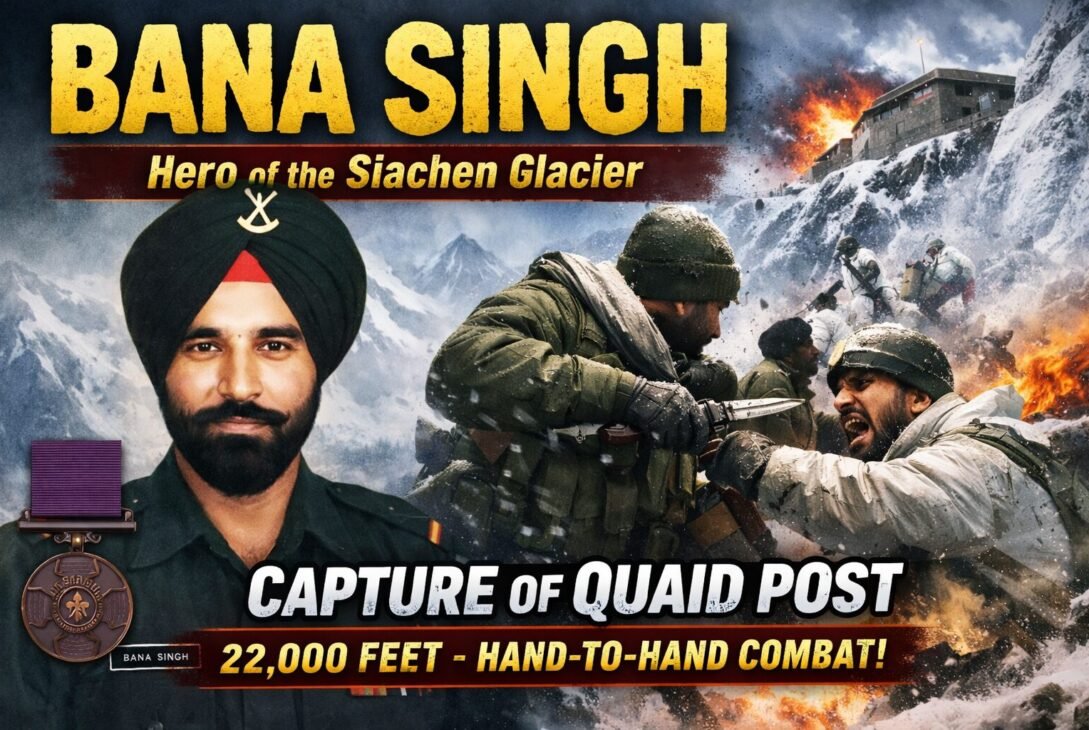
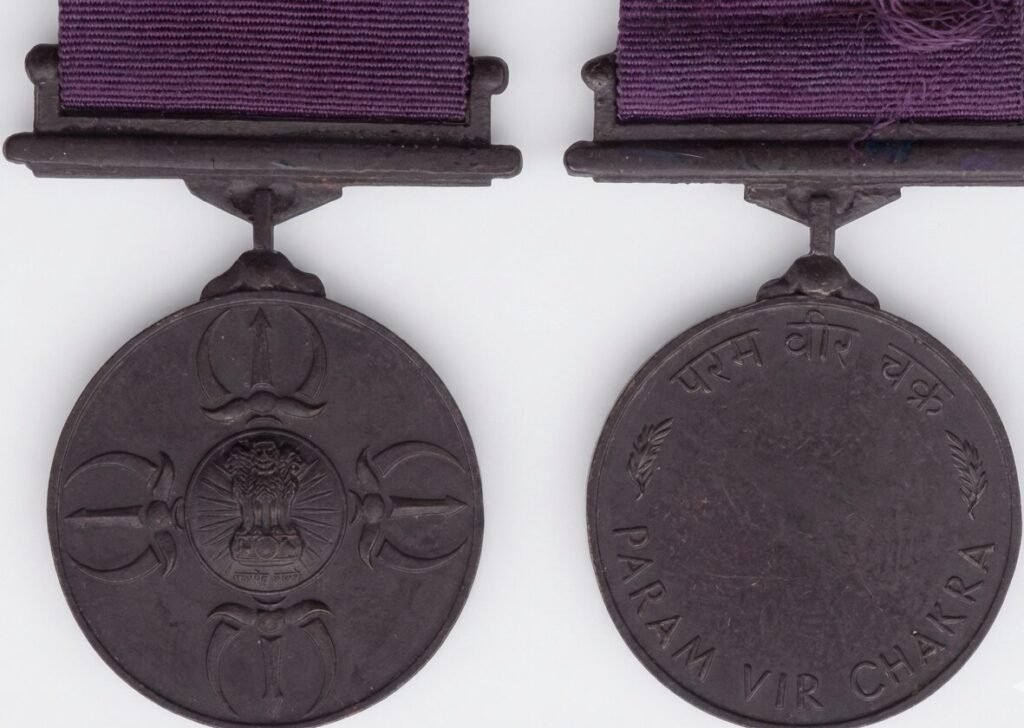
Bana Singh remains one of India’s greatest military heroes. On June 26, 1987, this fearless soldier climbed a 1,500-foot ice wall at 22,000 feet. He then captured a Pakistani post through hand-to-hand combat. According to Indian Army records, his bravery during Operation Rajiv earned him the Param Vir Chakra. This is India’s highest wartime gallantry award.
The mission seemed impossible from the start. Temperatures dropped to minus 60 degrees Celsius. Weapons froze in the soldiers’ hands. Yet Bana Singh and his team pressed forward. They fought at what military historians call the highest battlefield in the world.
This article tells the complete story of that historic mission. You will learn about the strategic importance of Quaid Post. You will understand why the Indian Army’s operations in Siachen matter. Most importantly, you will discover how courage can triumph over impossible odds.
Why India Needed Operation Rajiv After Operation Meghdoot
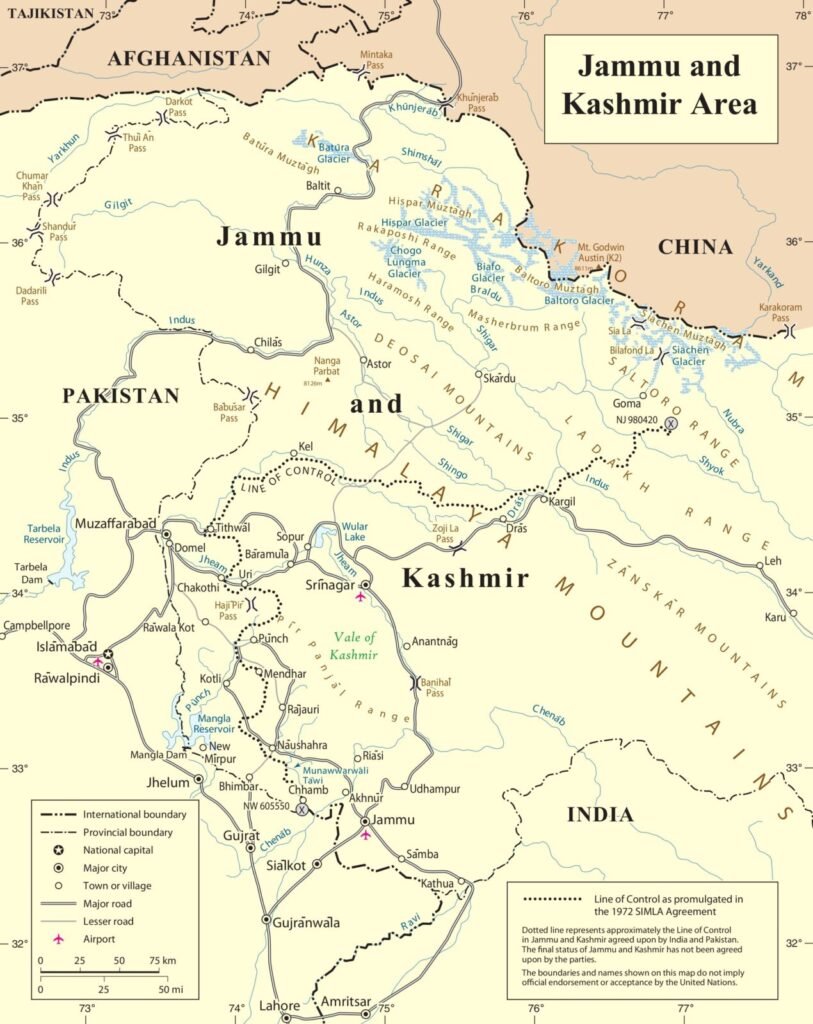
In April 1984, India launched Operation Meghdoot. The Indian Army captured the Siachen Glacier before Pakistan could occupy it. Military records confirm this operation secured the Saltoro Ridge’s main peaks. India also cut direct connectivity between Pakistan and China.
Pakistan’s military dictator Zia-ul-Haq refused to accept this defeat. He ordered multiple attempts to recapture Siachen posts. Each attempt failed. However, in early 1987, something changed.
Pakistan’s Capture of Quaid Post
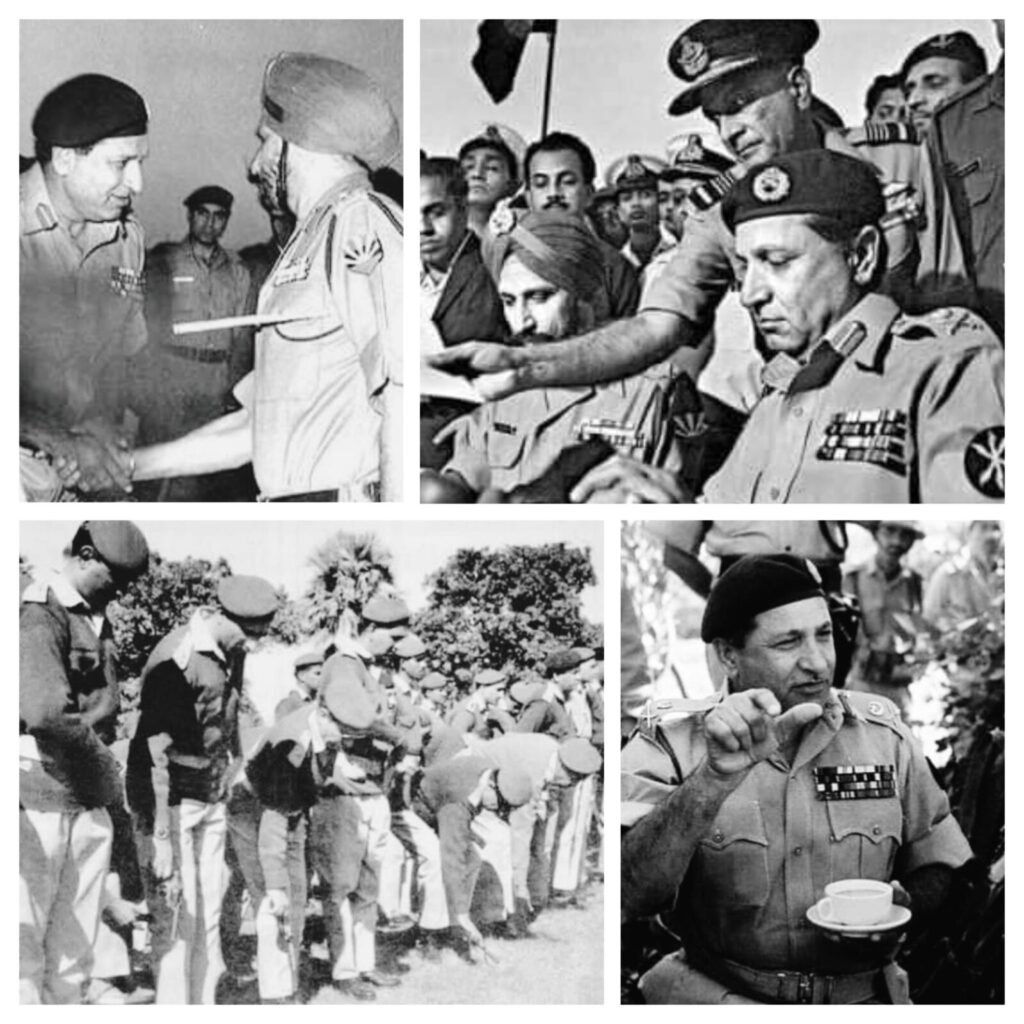
Brigadier Pervez Musharraf led Pakistani forces to a strategic position. They captured a 22,000-foot peak near Bilafond La. Pakistan named this position “Quaid Post” after Muhammad Ali Jinnah, their founding father.
This post wasn’t the highest on Saltoro Ridge. But its location created serious problems for India. From Quaid Post, Pakistan could monitor 80 kilometers of Indian territory. They had a direct view of the Siachen Glacier.
The strategic implications were severe:
- Pakistan could watch every Indian troop movement.
- They dominated India’s Amar Post to the south.
- They controlled sight lines to Sonam Post in the north.
- Supply helicopters were constantly under fire from this position.
On April 18, 1987, Pakistan attacked India’s Sonam Post from Quaid Post. Two Indian soldiers died. Pakistan also started firing at supply helicopters. Indian troops couldn’t receive basic necessities.
The Indian Army decided to act. Quaid Post had to be captured.
The First Assault: Lieutenant Rajiv Pandey’s Sacrifice
The Indian Army planned carefully before attacking. First, they sent a patrol unit to gather intelligence. The 8 Jammu and Kashmir Light Infantry received this mission.
Second Lieutenant Rajiv Pandey led 13 soldiers toward Quaid Post on May 29, 1987. According to regimental records, Pandey was a young but courageous officer. His unit had recently been inducted into the Siachen area.
The Deadly Climb
Reaching Quaid Post required climbing a nearly vertical ice cliff. The wall rose 1,500 feet with an 80-90 degree incline. One slip meant certain death.
The soldiers climbed slowly and carefully. They used ropes and ice axes to create footholds. Hours passed as they made progress.
Then Pakistani troops spotted them.
Machine gun fire rained down from above. The Indian soldiers couldn’t take cover on the vertical cliff. They couldn’t return fire effectively. Ten soldiers, including Lieutenant Rajiv Pandey, were martyred that day.
But their sacrifice wasn’t in vain. Before dying, they had fixed ropes along the route. They had carved footholds into the ice. These would help the soldiers who came after them.
Operation Rajiv: Named to Honor a Fallen Hero
The Indian Army launched a new operation immediately. They named it “Operation Rajiv” to honor Second Lieutenant Rajiv Pandey’s memory. Major Varinder Singh was assigned to lead this mission.
Historical documentation reveals the team composition:
- Leader: Major Varinder Singh
- Deputy: Captain Anil Sharma
- JCOs: Subedar Harnam Singh, Subedar Sansar Chand, Naib Subedar Bana Singh
- Total strength: 62 soldiers
The 62 Indian soldiers assembled at Sonam Post on the night of June 23, 1987. They established a base camp. The next morning, they would begin their assault.
The Second Attempt: Subedar Harnam Singh’s Team
On the night of June 24, Subedar Harnam Singh led 10 soldiers toward Quaid Post. They followed the same route Lieutenant Pandey had pioneered. The climb was treacherous.
Days had passed since the first assault. Snow had buried the ropes and footholds Pandey’s team had created. The soldiers also discovered the frozen bodies of their fallen comrades beneath the ice.
They continued climbing despite the emotional burden. But when they neared the top, Pakistani troops spotted them again. This time, something worse happened.
The extreme cold had frozen their weapons. Not a single rifle would fire. Meanwhile, Pakistani troops kept shooting. They had placed kerosene stoves beneath their guns to prevent freezing.
Subedar Harnam Singh made a difficult decision. He ordered a retreat to save his men. They carried their martyred comrades’ bodies back to base.
The Third Attempt: Radio Failure at the Summit
Major Varinder wasted no time. On June 25, he sent another team under Subedar Sansar Chand. This assault also happened at night.
Sonam Post provided heavy cover fire. Pakistani positions faced constant bombardment. Under this protection, Subedar Sansar Chand’s team reached the top of Quaid Post.
Victory seemed near. But they needed reinforcements to hold the position. Sansar Chand tried to radio Major Varinder, who was just 100 meters away.
The radio batteries had frozen. No communication was possible.
Without reinforcements, holding the position was impossible. The mission was aborted again.
The Final Assault: Bana Singh’s Legendary Victory
Three days had passed since Operation Rajiv began. The soldiers had no proper shelter at this altitude. Their food and water had run out. They were melting snow in their mouths to stay hydrated.
Major Varinder kept checking on his men. At high altitude, mental breakdowns are common. He asked soldiers to recite their names and their friends’ names. This confirmed they remained mentally stable.
Despite exhaustion, the soldiers’ determination never wavered. They wanted revenge for their fallen brothers. They refused to retreat.
The Daytime Decision
Major Varinder made a bold choice. He couldn’t wait for nightfall. The soldiers’ condition was deteriorating rapidly. The final assault would happen during daylight on June 26, 1987.
Two teams were formed:
- Team 1: 8 soldiers led by Major Varinder Singh
- Team 2: 5 soldiers led by Naib Subedar Bana Singh
Both teams started climbing at approximately 1:30 PM. The weather was terrible. Blizzard conditions reduced visibility to almost nothing.
This bad weather became their advantage. Pakistani troops couldn’t believe anyone would attempt a climb in such conditions. They assumed no attack was coming after two failed attempts.
Bana Singh’s Unconventional Approach
Naib Subedar Bana Singh chose an unexpected direction for his climb. His team approached from a route that seemed suicidal. No one expected an attack from that direction because it appeared impossible.
His team included riflemen Chunni Lal, Laxman Das, Om Raj, and Kashmir Chand. They climbed silently through the storm.
When Bana Singh reached Quaid Post, he saw a single Pakistani bunker. Several enemy soldiers sat inside, unaware of the approaching Indians. The poor weather had prevented any cover fire support for Bana Singh’s team.
He threw a grenade into the bunker. The explosion killed several Pakistani soldiers. The survivors rushed out to counterattack.
Hand-to-Hand Combat at 22,000 Feet
Bana Singh and his men raised their weapons to fight back. But the guns had frozen again. At this highest battlefield in the world, they had only their hands.
What followed was extraordinary. Hungry, thirsty, exhausted soldiers fought hand-to-hand combat at 22,000 feet. The thin air made every movement difficult. The extreme cold numbed their bodies.
Yet Bana Singh and his team fought with unmatched ferocity. Six Pakistani soldiers were killed in the close combat. The remaining enemies jumped off the cliff to escape.
Quaid Post now belonged to India.
After the Victory: Honors and Renaming
Major Varinder Singh also suffered serious injuries during the operation. Artillery airbursts caused wounds to his chest and torso. Ironically, the extreme cold saved his life. His blood froze before he could bleed to death.
Pakistan attempted to recapture the post multiple times afterward. Every attempt failed. India has maintained control since June 26, 1987.
Military Honors Awarded
The Indian government recognized the extraordinary bravery displayed during Operation Rajiv:
| Soldier | Award |
| Naib Subedar Bana Singh | Param Vir Chakra |
| Subedar Harnam Singh | Maha Vir Chakra |
| Subedar Sansar Chand | Maha Vir Chakra |
| Major Varinder Singh | Vir Chakra |
| Second Lt. Rajiv Pandey | Vir Chakra (Posthumous) |
| Rifleman Chunni Lal | Sena Medal |
| Rifleman Om Raj | Sena Medal |
Quaid Post Becomes Bana Post
To honor Bana Singh’s incredible courage, the Indian Army renamed Quaid Post. It is now officially called “Bana Post” or “Bana Top.” This name change symbolizes India’s permanent victory at this location.
According to Indian Army records, Bana Singh retired as Honorary Captain. His Param Vir Chakra represents the highest recognition for battlefield valor. Only 21 soldiers have ever received this award.
The Significance of Bana Post for Indian Army Siachen Operations
Bana Post remains strategically vital even today. Its location allows India to dominate the surrounding terrain. Any Pakistani movement in this sector can be monitored from this position.
The capture also demonstrated several important lessons about high altitude warfare:
Equipment Challenges: Weapons and electronics freeze at extreme altitudes. Soldiers must find innovative solutions like the kerosene stoves Pakistan used.
Human Limits: Operating above 20,000 feet pushes human endurance to the extreme. Oxygen deprivation affects judgment and physical capability.
Determination Matters: Superior position doesn’t guarantee victory. Bana Singh’s team proved that courage and determination can overcome tactical disadvantages.
Flexibility Wins: Major Varinder’s decision to attack during daylight broke conventional wisdom. Sometimes unconventional approaches succeed where standard tactics fail.
Timeline of Operation Rajiv
- April 1984: India captures Siachen Glacier in Operation Meghdoot
- Early 1987: Pakistan captures Quaid Post under Brigadier Pervez Musharraf
- April 18, 1987: Pakistan attacks Sonam Post from Quaid Post; 2 Indian soldiers martyred
- May 29, 1987: Lt. Rajiv Pandey’s reconnaissance mission; 10 soldiers martyred
- June 23, 1987: Operation Rajiv begins; 62 soldiers assemble at Sonam Post
- June 24, 1987: Subedar Harnam Singh’s team retreats due to frozen weapons
- June 25, 1987: Subedar Sansar Chand reaches the top, but the radio fails; the mission is aborted
- June 26, 1987: Naib Subedar Bana Singh captures Quaid Post through hand-to-hand combat
- Post-1987: Quaid Post renamed to Bana Post; Bana Singh receives Param Vir Chakra
Conclusion: Remembering the Heroes of Siachen
Bana Singh’s victory at Quaid Post represents the finest traditions of the Indian Army. At the highest battlefield in the world, ordinary men achieved extraordinary things. They climbed impossible heights. They fought with frozen weapons. They won through sheer willpower.
Operation Rajiv cost India 12 brave soldiers. Their sacrifice secured a strategic position that remains under Indian control. The renaming of Quaid Post to Bana Post ensures their memory lives forever.
Every Indian should know this story. It reminds us of the price soldiers pay for our security. The next time you hear about Indian Army Siachen operations, remember Bana Singh. Remember the men who conquered the unconquerable.