Introduction
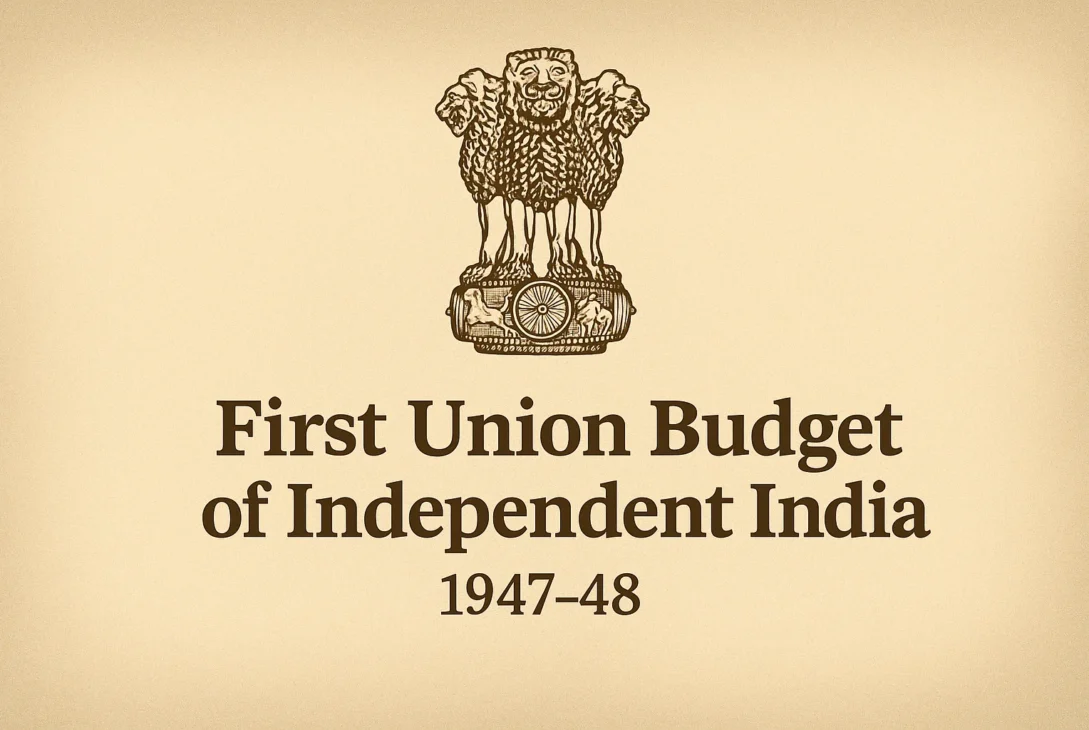
The first budget of independent India was not merely a financial statement. It was a declaration of economic intent by a nation emerging from colonial rule, partition, and unprecedented humanitarian upheaval. Presented just months after independence, this budget laid the foundation for India’s fiscal sovereignty at a time when administrative systems were fragile and national resources stretched thin.
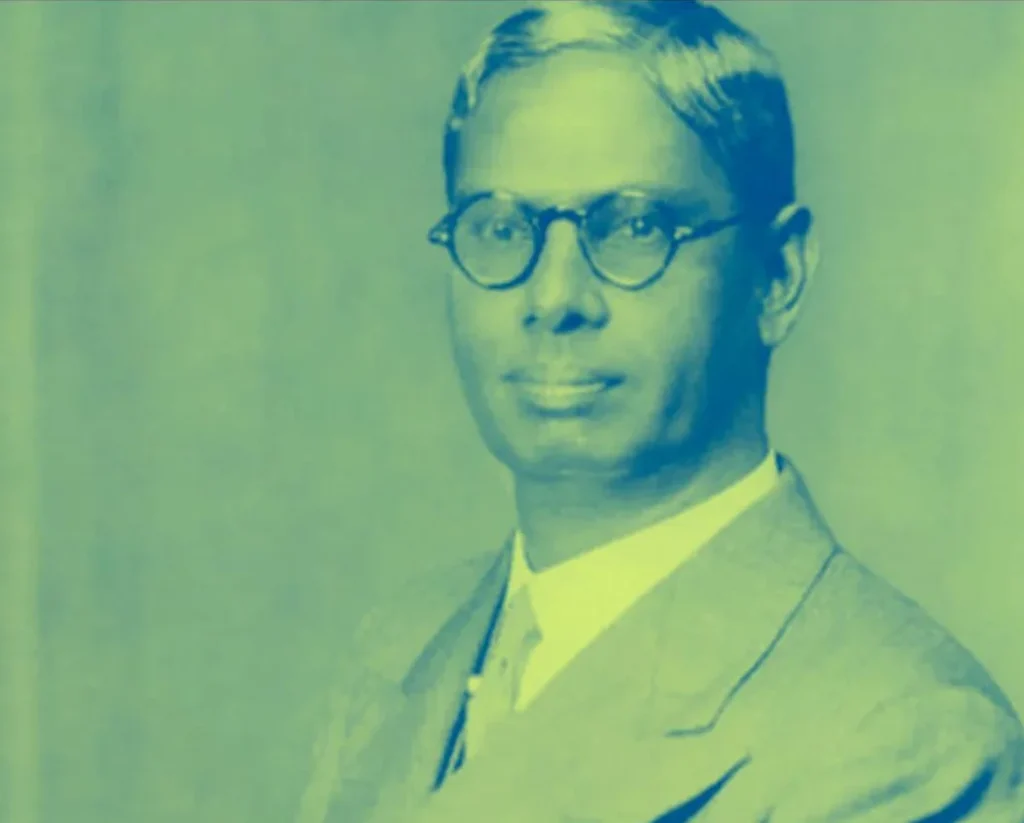
On 26 November 1947, India’s first Finance Minister R. K. Shanmukham Chetty rose in the Constituent Assembly to present the first Union Budget of independent India. He described the moment as a rare privilege, yet acknowledged the immense responsibility of steering the country through economic uncertainty, refugee rehabilitation, food shortages, and defence reorganisation.
This article examines the Union Budget 1947 in depth — its historical context, revenue and expenditure priorities, economic challenges, and long-term significance in Indian economic history.
Historical Context of the First Budget of Independent India
The first budget of independent India was shaped by circumstances unlike any other fiscal exercise in the country’s history. Independence came with Partition, triggering economic disruption on a massive scale.
India and Pakistan emerged as two dominions with intertwined infrastructure, trade routes, and administrative systems, suddenly divided. Railways, currency, defence assets, and industrial supply chains had to be separated almost overnight. Consequently, fiscal planning became an exercise in crisis management rather than long-term projection.
Despite these challenges, the government believed that placing a formal budget before the people’s representatives was essential for democratic accountability. Transitional constitutional provisions allowed interim spending, but a full budget was necessary to restore confidence in public finance.
Who Presented the First Budget of Independent India?
R. K. Shanmukham Chetty and His Role
R. K. Shanmukham Chetty, a seasoned administrator and economist, became India’s first Finance Minister. When he presented the first budget of independent India, the country faced inflationary pressures, refugee inflows, and severe food shortages.
Chetty emphasised discipline, cooperation, and national unity. He framed the budget not as a technical document but as a collective responsibility shared between the state and citizens. His speech highlighted transparency, fiscal prudence, and the moral obligation of the government to protect ordinary people during extraordinary times.
This emphasis distinguished the Union Budget 1947 from colonial-era budgets that prioritised imperial revenue over public welfare.
Period Covered by the Union Budget 1947
The first budget of independent India covered a short but critical period — from 15 August 1947 to 31 March 1948. This truncated timeframe reflected the political transition from British rule and the dissolution of the pre-partition central government.
Although brief, the budget addressed immediate priorities:
- Rehabilitation of refugees
- Defence reorganisation
- Food security
- Economic stabilisation
The government recognised that accurate long-term projections were impossible under prevailing conditions. Therefore, many estimates were marked as provisional.
Economic Impact of Partition on India
Partition fundamentally altered the post-independence Indian economy. While India retained much of the industrial base and mineral resources, Pakistan inherited a larger share of agricultural production, especially foodgrains.
Refugee Crisis and Fiscal Pressure
One of the most severe consequences was the refugee crisis. Millions crossed borders amid communal violence, particularly in Punjab and the North-West Frontier Province. Relief, resettlement, and rehabilitation placed an enormous burden on public finances.
The budget explicitly acknowledged that refugee expenditure was unpredictable. Still, the government committed substantial funds for both immediate relief and long-term integration.
Food Crisis and Agricultural Strain
Food scarcity dominated economic planning in 1947. The failure of the “Grow More Food” campaign and partition-induced agricultural dislocation forced India to rely heavily on imports.
Between 1944 and 1947, India imported 43.8 lakh tonnes of foodgrains, costing over ₹127 crore. By September 1947 alone, an additional 10.62 lakh tonnes were imported. This dependence severely strained foreign exchange reserves.
A committee under Sir Purushottamdas Thakurdas recommended steps toward food self-sufficiency, marking the beginning of long-term agricultural planning.
Inflation and Declining Production
Inflation emerged as a major concern in the first budget of independent India. The Bombay cost-of-living index rose sharply between 1945 and 1947, driven by supply shortages and pent-up wartime savings entering circulation.
Industrial production declined across sectors:
- Cloth
- Steel
- Cement
- Coal
Labour unrest further disrupted output. The Finance Minister stressed labour cooperation as essential for stabilising prices and restoring economic normalcy.
Revenue and Expenditure in the Union Budget 1947
For the period covered, revenue was estimated at ₹171.15 crore, while expenditure reached ₹197.39 crore, resulting in a provisional deficit of ₹26.24 crore.
Major Revenue Sources
- Income tax & excess profits tax: ₹118 crore
- Customs duties: ₹50.5 crore
- Posts & Telegraphs: ₹15.9 crore
- Railways: No surplus expected
The uncertainty of post-partition adjustments made precise forecasting impossible.
Defence Expenditure After Independence
Defence was the single largest expenditure item, amounting to ₹92.74 crore. This included:
- Halting demobilisation
- Dividing troops between India and Pakistan
- Maintaining a standing army of 260,000
- Withdrawing British troops
Defence costs also covered internal security operations and revised pay scales.
Civil Expenditure and Nation-Building
Civil expenditure totalled ₹104.5 crore, of which ₹44.5 crore went toward food subsidies and refugee relief.
The remaining expenditure supported:
- Education and health
- Scientific research
- Broadcasting and aviation
- General administration
- Grants and loans to provinces
These allocations reflected early nation-building priorities.
Sterling Balances and Import Policy
India’s sterling balances peaked at ₹1,733 crore in April 1946, but declined due to heavy imports. The government introduced restrictive import policies to conserve foreign exchange.
An agreement with the UK divided sterling into deposit and current accounts, allowing controlled spending in multiple currencies. Despite a global dollar shortage, India maintained a stable external position.
Development Projects in the First Budget
Despite fiscal strain, development spending continued. Major projects included:
- Damodar Valley Authority
- Hirakud Dam in Orissa
- Bhakra Dam in East Punjab
These initiatives laid the foundation for India’s future infrastructure-led growth.

Conclusion
The first budget of independent India was more than a balance sheet. It was a statement of resolve by a nation determined to overcome chaos through planning, discipline, and democratic accountability.
Despite food shortages, inflation, refugee rehabilitation, and defence pressures, the Union Budget 1947 demonstrated fiscal responsibility and long-term vision. It acknowledged constraints honestly while laying the groundwork for development, self-reliance, and economic stability.
As a foundational document in Indian economic history, the first budget remains a powerful reminder that nation-building begins with transparent and principled public finance.