Introduction
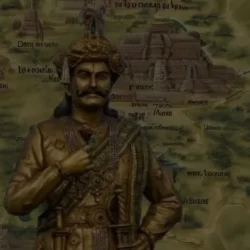
Kempegowda believed that “the happiness of the subjects is the king’s happiness.”
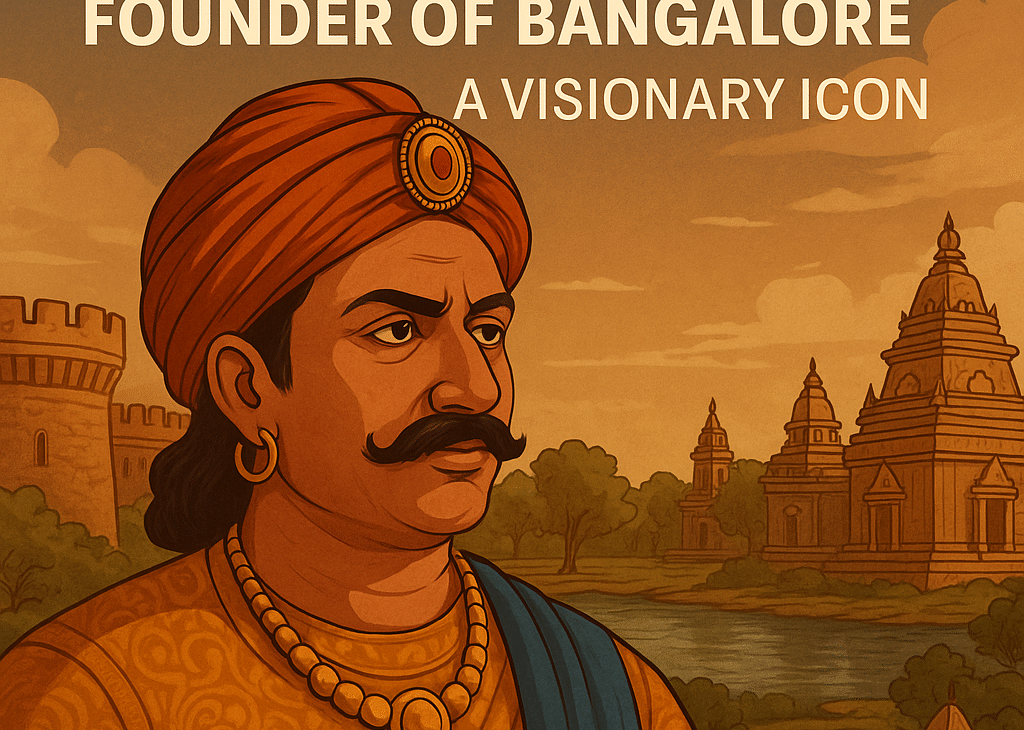
Guided by this ideal, Kempegowda established the systems, structures, and philosophy that continue to shape Bengaluru, demonstrating his enduring impact as a visionary founder.
The Founding Ritual: Ploughing the City’s Boundaries
Kempegowda began his city-building mission with a sacred founding ceremony.
He prayed to Ranganatha, Bhairaveshwara, and Kempambike, then tied four pairs of white oxen to four ploughs. Each pair was made to plough outward in the four cardinal directions.
The oxen stopped at specific spots.
Those points became the four boundaries and the four grand Raj Paths that anchored the new Bengaluru.
This ritual marked the birth of an organised urban plan that would endure for centuries.
Blueprint of a Metropolis: Organised Planning & Petes
Kempegowda created Bengaluru as a city of structured petes (market districts). Each pete served a community or trade, ensuring order and economic growth.
Trade-Based Petes
- Aralepete
- Akkipete
- Kumbarpete
- Ragipete
- Ganigarapete
- Madivala Pete
- Hoovadigarpete
- Anchepete
- Bale Pete
- Chikka Pete
Community-Based Petes
- Tigalarapete
- Nagarthapete
- Komatipete
- Gaudanapete
- Sultanpete
He provided wide roads, drinking water, shops, residential houses, and administrative buildings—a rare civic vision for the 16th century.
In doing so, Kempegowda established the city’s foundational urban planning principles, which continue to influence Bengaluru’s identity today.
The Guardian Fortress: A City Secured
Bengaluru needed protection from constant enemy threats.
Kempegowda responded by building a four-mile-long stone fort.
Key features included:
- A deep, water-filled moat
- Thorny bush barriers
- Four Raj-Beedi roads are aligned around the fort.
- Strong ramparts designed for defence
The Nine Gates (Mahadwaras & Upadwaras)
Major Gates:
- Halasuru Gate (East)
- Sondakoppa Gate (West)
- Yelahanka Gate (North)
- Anekal/Ravutanahalli Gate (South)
Secondary Gates:
- Yeshwanthpur
- Kengeri
- Kanakanahalli
- Sarjapur
- Varthur
The fort protected both people and resources, symbolising strategic leadership.
Lifeline of the City: The Lake Builder
Kempegowda recognised that agriculture and irrigation were the foundation of a prosperous society.
So he engineered one of the most extensive lake systems in South India.
Phase One Lakes
- Dharmambudhi Lake
- Karanji Lake
- Sampangi Lake
- Kempapura Agrahara Lake
- Mavalli Lake
Phase Two Lakes
- Chennamma Lake
- Siddapura Lake
- Akkitimmana Halli Lake
Purpose of the Lakes
- Drinking water for citizens
- Irrigation for farms and gardens
- Supplying water to the fort’s moat
- Supporting temples and public areas
Example: Dharmambudhi Lake Engineering
- Two sluices: one for the palace, another for farms
- Temples around the lake
- A mantapa for pilgrims
- Four architectural corner towers
- Today, Kempegowda Bus Station stands at this site
Through these lakes, Kempegowda transformed Bengaluru into a flourishing, water-secure city, laying the groundwork for its identity as the Garden City.
A Network of Forts: Strategic Dominion
Beyond Bengaluru, Kempegowda strengthened and built several forts across the region.
Major Forts
- Ramagiri
- Hutridurga
- Huliyurdurga
- Shivagange
- Devarayanadurga (later name)
Architectural Brilliance
Ramagiri Fort
- Seven concentric stone walls
- Armoury “Karkhana Pally”
- Temples of Rama, Garuda, Ganesha, and Venugopala
- Defence architecture blended with natural hills.
Hutridurga Fort
- Seven layers of fortification
- Nine zigzag gates for enemy deterrence
- Loopholes for firing
- Temples and administrative offices were built adjacent
Huliyurdurga
- Seven-layered fort
- Palaces, stables, dwellings, and a court hall
- Gopala Krishna and Lakshmi temples
Shivagange
- Known as “Dakshina Kashi”
- Seven-stage fort
- Kalyani, Basava Mantapa, and Kempegowda’s own throne (Kempegowda Hajaru)
- Administrative and religious centre
These forts reveal Kempegowda’s military genius and regional administrative command.
A Patron of Faith: Temple Construction & Religious Harmony
Kempegowda personally directed sculptors while building temples.
He is credited with constructing 44 temples across key petes.
Important Temples
- Kote Venkataramana Temple
- Dharmarayaswamy Temple (Karaga festival centre)
- Temples around Dharmambudhi Lake
- Lakshminarasimha & Kashi Vishveshwara temples in Bale Pete
- Numerous Shaiva, Vaishnava, and Veerashaiva shrines
He invited Tigalas, expert horticulturalists, and settled them in Tigalarapete, linking community development to religious life.
His inclusive patronage earned him the title “Dharmaprabhu”.
Kempegowda made Bengaluru a Kalyananagara — a city of welfare, culture, and religious harmony.
The Administrator: Welfare and Decentralised Governance
Kempegowda’s administration struck a balance between fairness, efficiency, and grassroots empowerment.
Key Governance Measures
- Divided the province into three administrative parts
- Fair taxation without exploiting citizens
- Appointed Karnikars and tax officers to visit villages
- Maintained a strong army of 8,000 infantry and 1,000 cavalry
- Built avenue trees, roads, rest houses, and food shelters
- Ensured comfort for travellers through Anna Chatras and Dharma Chatras
Decentralised Governance (Vikendrikarana)
Officers included:
- Shanabhoga
- Patel
- Jois
- Toti
- Kammara
- Agasa
- Talavara
- Akkasaliga
- Kambara
All worked under a Parupattedara who reported upward. This system ensured every village had an active administration.
Kempegowda’s governance model was ahead of its time, emphasising dignity, welfare, and decentralisation.
Conclusion: The Eternal Blueprint of the Garden City
Kempegowda was more than a ruler.
He was a city founder, water engineer, fort builder, temple patron, and benevolent administrator.
Modern Bengaluru — its lakes, markets, fort traces, roads, and cultural traditions — stands on the foundations he laid.
The Garden City’s earliest blueprint was crafted by its visionary 16th-century mind, and its influence continues to shape the metropolis.