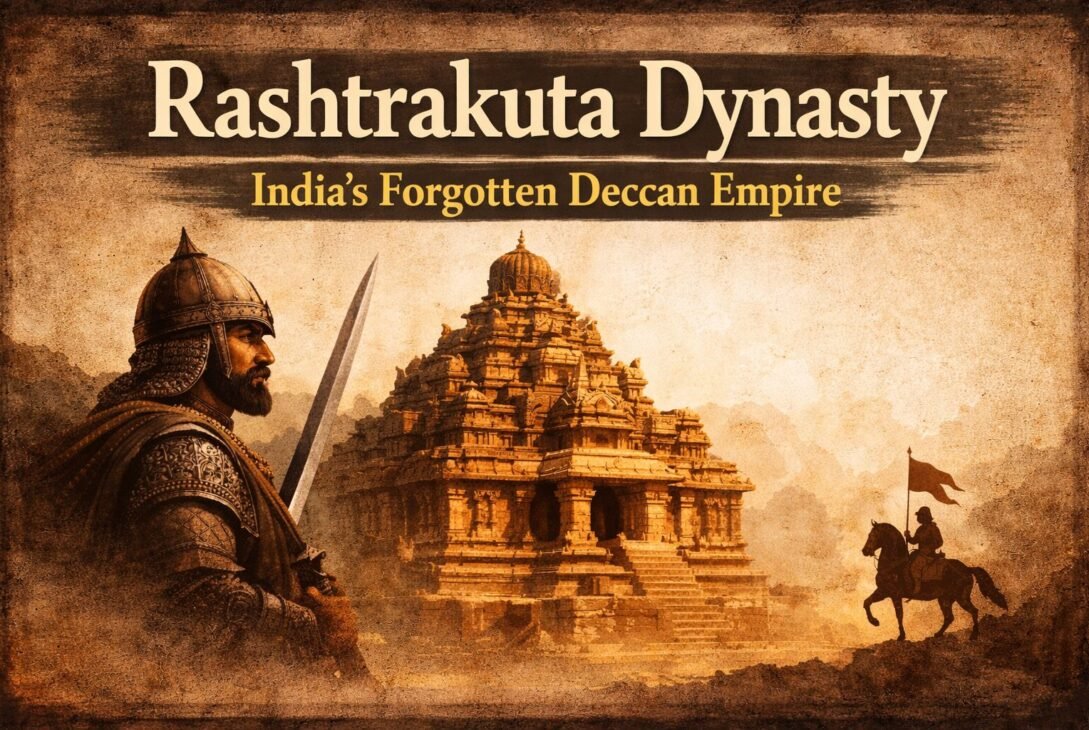
In 851 CE, an Arab chronicle — the Silsilat al-Tawarikh — placed the Rashtrakuta dynasty among the four principal empires in the entire world. Not a regional power. Not a promising upstart. One of four.
That statement deserves reflection. At the time, the Rashtrakutas ruled a vast stretch of the Indian subcontinent from their base in the semi-arid Deccan region, and yet most people today may not be able to name any of their emperors. The Mauryas hold prominence in textbooks. The Guptas are highlighted in narratives of the golden age. The Rashtrakuta dynasty is often relegated to a brief mention, if included at all.
Here’s the thing: that obscurity is entirely undeserved. For roughly two and a half centuries, this south Indian empire dominated medieval India’s geopolitics, produced some of its most extraordinary architecture, and ran a culturally rich court that drew leading scholars from across the subcontinent. Their story is one of civil wars, mountain-crossing cavalry campaigns, a philosopher-emperor who may have abdicated to become a monk, and a collapse so swift that it serves as a masterclass in what not to do with a hard-won empire.
This is the full history of the Rashtrakuta dynasty — from obscure feudatory to world power, and back again.
From Feudatory to Founder: How Dantidurga Built the Empire
The story begins not with conquest, but with loyalty—and the leverage that loyalty can eventually yield.
In the 730s CE, a Rashtrakuta chieftain named Dantidurga served as a feudatory to the Chalukya empire, the dominant power in the Deccan at the time. His most notable early service was helping to repulse two Arab invasions that, had they succeeded, could have permanently reshaped the religious and political landscape of South India. Those battlefield victories mattered. They built Dantidurga’s reputation and, more importantly, his independence of action.
Over the following decade and a half, he began moving on his own terms. He subdued various kings across central India, then cemented his southern flank by forming a marriage alliance with the Pallava king in Tamil country. By 753 CE, Dantidurga’s sphere of influence had effectively encircled the Chalukyas — his former masters. So he struck. As the Pallavas pressed from the south, Dantidurga launched a direct assault on Chalukya core territories.
He died in 756 CE, having dismantled one empire and laid the foundations of another. The question of who founded the Rashtrakuta dynasty is formally answered with his name — but the dynasty’s true consolidation fell to his successor.
Krishna I and the Kailasha Temple
After Dantidurga’s death, his uncle Krishna I took the throne and finished what his nephew had started. By 757 CE, the remaining Chalukya resistance had been crushed completely. Krishna, I then pushed further — conquering the Ganga dynasty, absorbing the Konkan coastal regions, and forcing the Eastern Chalukyas into submission as feudatories.
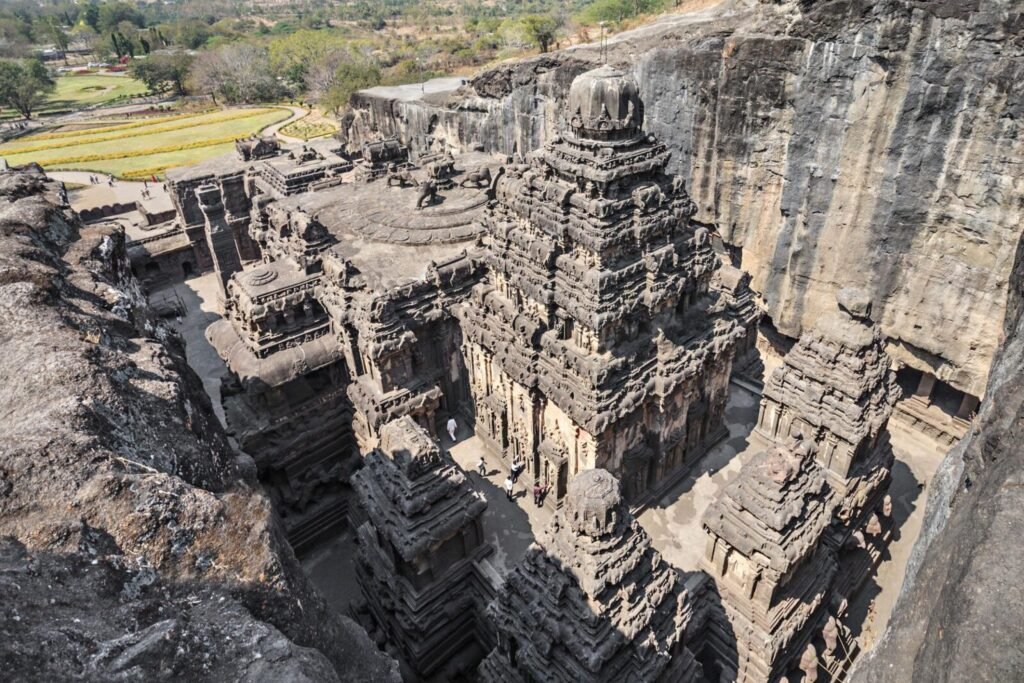
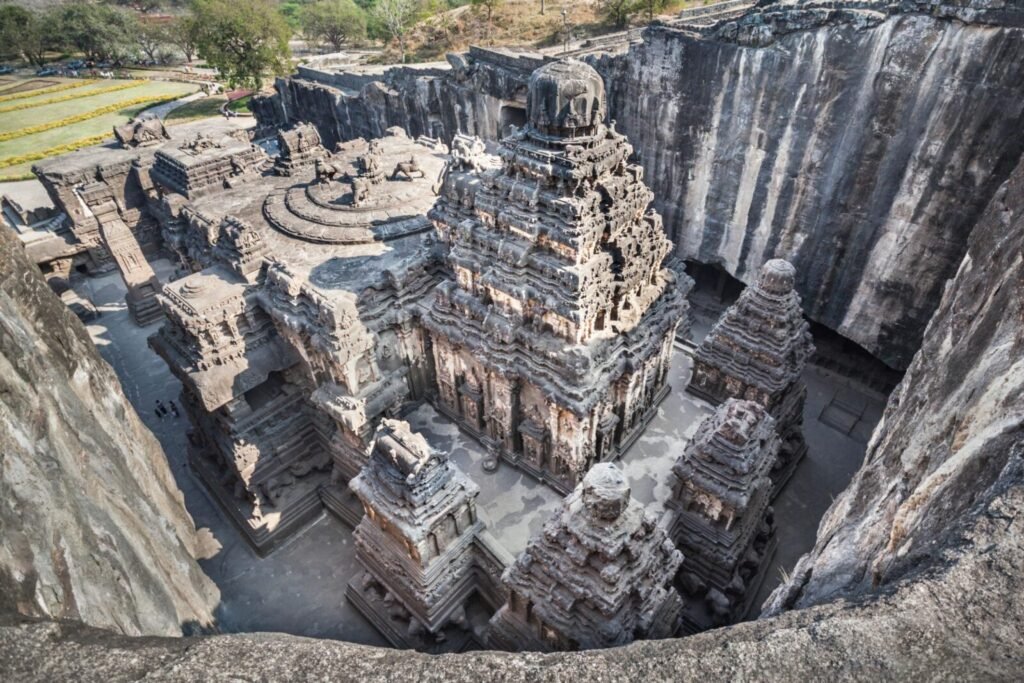
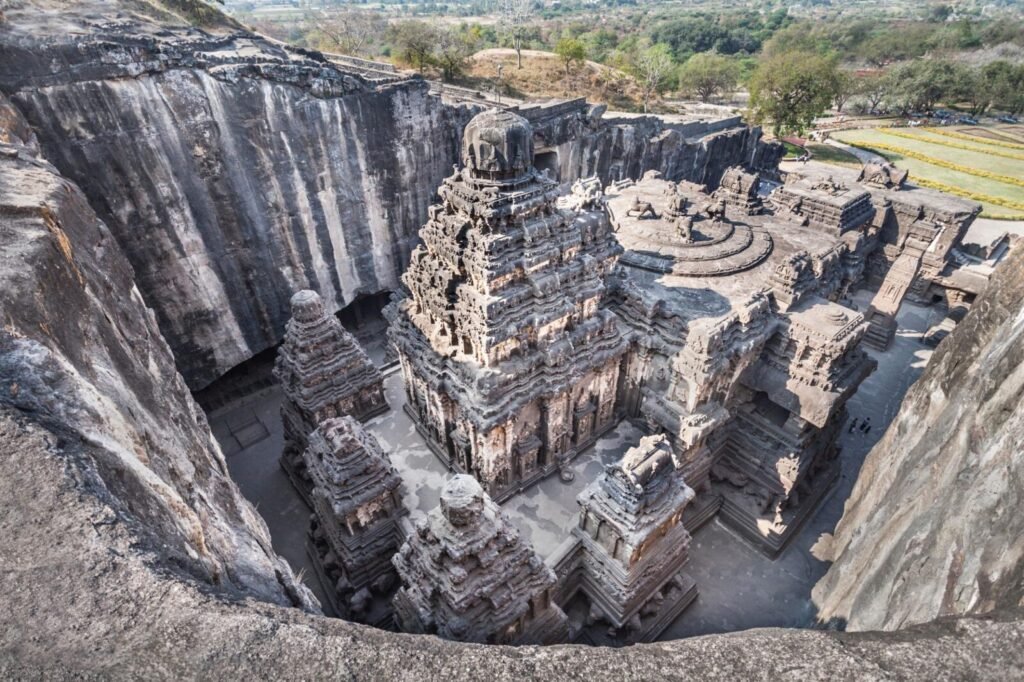
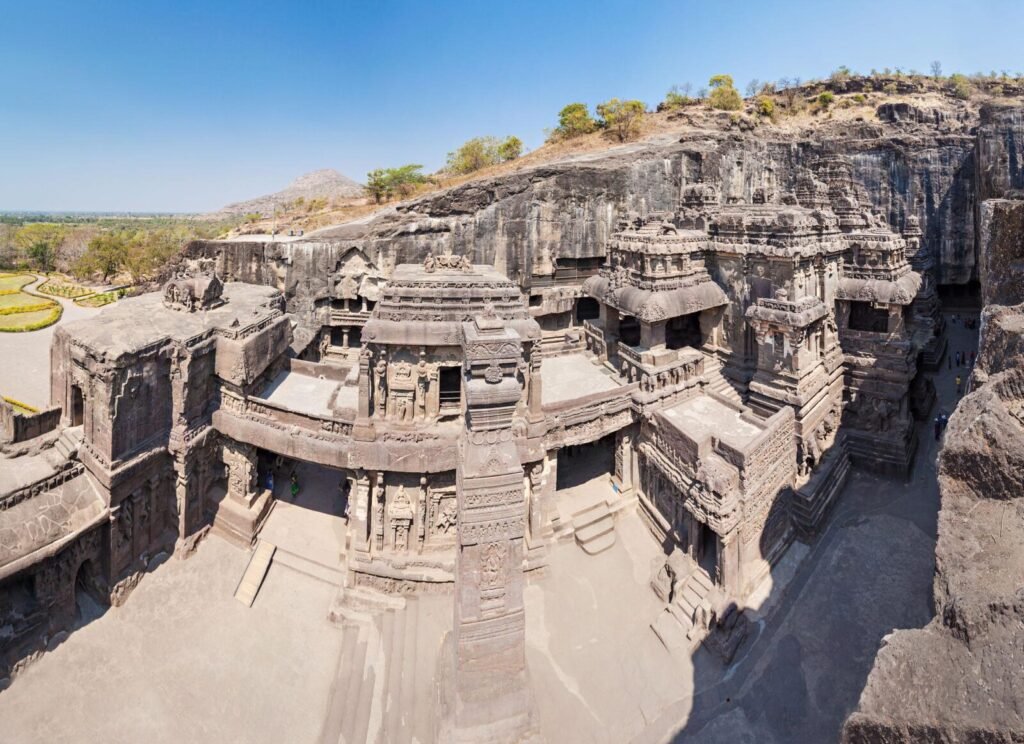
Between campaigns, he commissioned the Kailasha temple at Ellora — a rock-cut monolith carved top-down from a single basalt cliff, dedicated to Shiva, and today recognized as a UNESCO World Heritage Site. The scale of it is almost difficult to process even now: an entire temple complex excavated from living rock, not built up from blocks. It says something about the Rashtrakuta dynasty that one of their most warlike rulers paused long enough to create something that still stops people cold twelve centuries later.
By the end of Krishna’s reign in 774 CE, the dynasty had secured its core territories and established itself as the premier military, cultural, and economic force in South India. The next phase of the story would take them much further north.
The Tripartite Struggle for Kannauj: Three Empires, One Prize
To understand why the Rashtrakutas spent so much blood and gold fighting for control of a city a thousand miles from their Deccan heartland, you have to understand what Kannauj represented.
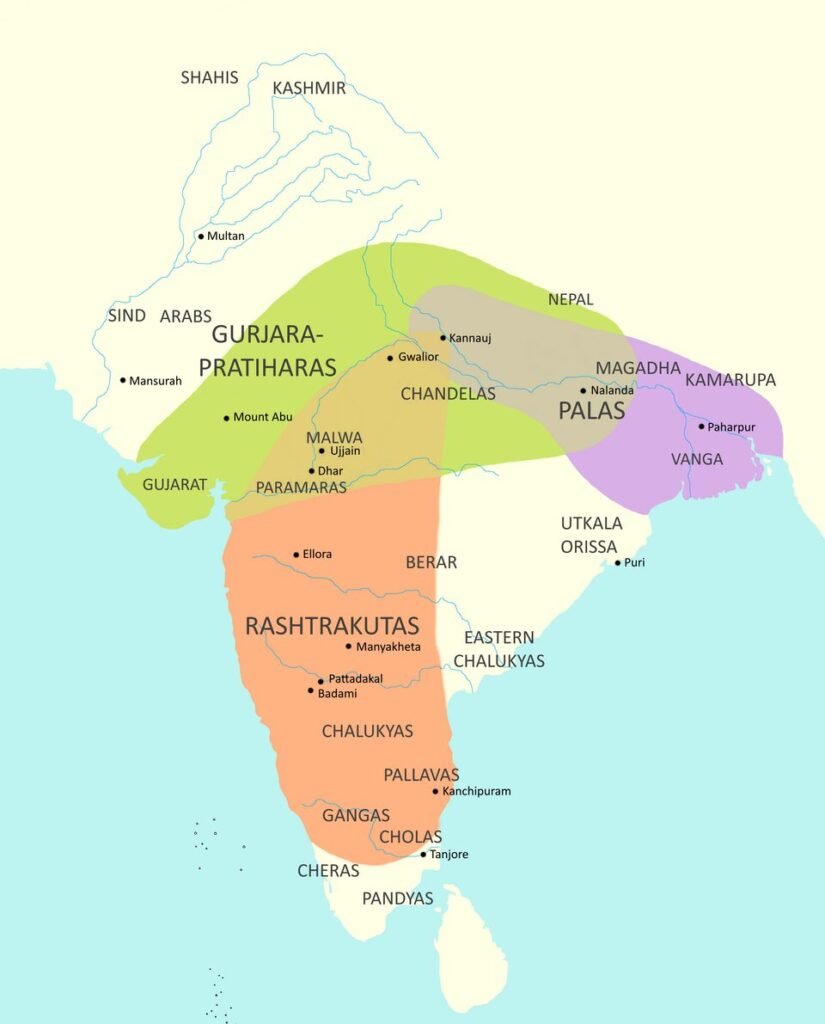
Source: Wikipedia
The tripartite struggle for Kannauj was the defining geopolitical contest of early medieval India — a three-way war lasting roughly two centuries between the Rashtrakutas in the south, the Pratiharas in the northwest (based in what is today Rajasthan), and the Palas in the northeast (centered in Bengal). All three empires rose to prominence at roughly the same time, and all three wanted the same thing: Kannauj.
Why Kannauj? The city was prosperous, strategically positioned in the central Ganges valley, and — perhaps most importantly — its possession carried a symbolic weight that went beyond economics. Controlling Kannauj was a declaration of imperial legitimacy on a subcontinental scale. For a South Indian dynasty like the Rashtrakutas to hold it would have been an extraordinary statement.
The Rashtrakutas had a particularly tense relationship with the Pratiharas, given their shared frontier across Gujarat and Malwa. But the contest pulled all three dynasties repeatedly into the same arena, decade after decade.
Dhruva I: The Raid That Started Everything
The tripartite struggle did not ignite in earnest until Emperor Dhruva I came to power in 780 CE. After consolidating his hold on the south and suppressing several internal rebellions, he looked north. The Palas held Kannauj. The Pratiharas held Gujarat and Malwa.
Dhruva’s solution was elegantly aggressive. First, he engaged the Pratiharas in central India and routed them so decisively that they retreated to their desert homeland, surrendering Gujarat and Malwa in the process. Then, with those northern gateways secured, he marched on Kannauj itself — drove the Palas out — and plundered it before returning south. It was more raid than occupation, but the message was unmistakable. The Rashtrakutas were now a north Indian power, whether the north liked it or not.
Govinda III: The Emperor Who Drank from the Himalayas
Dhruva’s son Govinda III, who ascended the throne in 793 CE after winning a civil war against his older brother Kambarasa, took the northern project much further. The succession dispute had cost time — Malwa and Gujarat slipped back to Pratihara control, Kannauj returned to Pala hands, and the Eastern Chalukyas declared independence (again). Govinda III’s response was a multi-year campaign launched in 800 CE that rewrote the map.
He defeated the Pratihara king Nagabhata II in Gujarat and Malwa, then made a structural fix his father had never attempted: instead of leaving existing local rulers as feudatories, he installed entirely new dynasties — his own brother Indra on the Gujarat throne, and the Paramara dynasty as loyal subordinates in Malwa. Loyal clients rather than restless vassals. Then he pushed ahead to Kannauj, captured it, and extracted the formal submission of Pala king Dharmapala.
The Sunjun inscription describes it with the kind of image that makes historical writing worth reading: his horses drank from icy Himalayan streams, and his war elephants tasted the sacred waters of the Ganges. Whether literally true or not, it captures what Govinda III’s campaign represented — a south Indian empire reaching the northern extremity of the subcontinent.
One way to read this entire period: the Rashtrakutas were the first South Indian power to seriously contest the idea that North India was a northern dynasty’s exclusive territory. The tripartite struggle was, at its core, a challenge to that assumption.
Amoghavarsha and the Golden Age of the Rashtrakuta Dynasty
On the way south from his northern campaign, Govinda III’s wife gave birth to a son along the banks of the Narmada River. That son, Amoghavarsha, would reign for 62 years — one of the longest recorded monarchical reigns in world history — and his era would look nothing like his father’s.
He came to power at 14, survived an early revolt by the feudatory Shivamara II that briefly unseated him (before his guardian and cousin Karka helped him reclaim the throne), and then — once stability was secured by around 821 CE — largely turned away from the wars of expansion that had defined every Rashtrakuta ruler before him. His instincts ran toward culture, diplomacy, and governance.
Religion, Culture, and the Arab Traveller’s Comparison
Amoghavarsha moved the capital to Manyakheta, reportedly building a city so grand that it was said to have seemed drawn from ancient mythology. His court patronized scholars, poets, and prose writers — particularly those working in Kannada — and spent lavishly on both religious and secular arts. He is credited with authoring the Kavirajamarga, the earliest extant literary work in the Kannada language, as well as a religious composition in Sanskrit.
His approach to religion was remarkably pluralistic. Jainism, Buddhism, and Hinduism were all officially patronized. But the Arab traveller Suleiman, writing during this period, noted that Amoghavarsha also made efforts to build mosques for the Muslim citizens, merchants, and traders living within the Rashtrakuta empire — and compared the diverse, mostly peaceful character of his reign to that of the Mauryan emperor Ashoka.
That comparison was not idle flattery. The Rashtrakutas had powerful strategic reasons to cultivate Muslim goodwill: their vast west-facing coastline made Arab traders their most valuable commercial partners, and allied Muslim kingdoms could apply useful pressure on the Pratiharas from the northwest. Religious tolerance was, among other things, geopolitically sensible. Half a century later, in 926 CE, a Rashtrakuta emperor would appoint an Arab Muslim as governor of the province of Sanjan — an act nearly unimaginable from any other Indian dynasty of the era.
Amoghavarsha converted from Hinduism to Jainism, and under his reign, Jainism began to flourish across the Deccan. Several Jain temples he patronized in Karnataka are today listed as UNESCO World Heritage Sites. Towards the end of his long life, he is believed to have abdicated the throne entirely to pursue religious pursuits — a fitting end for an emperor whose genius ran more toward meaning than conquest.
Krishna III, Maximum Extent, and the Fatal Mistake
The century after Amoghavarsha was mostly repetition: the Eastern Chalukyas cycling between independence and feudatory status, Kannauj changing hands, the Cholas rising in the south as a serious new challenger. The tripartite struggle reignited under Indra III between 914 and 929 CE, who successfully retook Kannauj after sensing the Pratihara weakness caused by a family dispute.
But the dynasty’s final capable monarch was Krishna III, who ascended in 939 CE. He rebuilt the economy, patronized cultural figures including the Kannada poet Sri Ponna, and campaigned aggressively in both directions. His most spectacular military achievement was the Battle of Takalam in 949 CE — a decisive victory against the Cholas that sent them into decades of internal chaos and allowed a Rashtrakuta occupation of Tamil country. The win turned on a single stray arrow that killed the Chola commander at a critical moment in the battle.
Under Krishna III, the Rashtrakuta dynasty reached its maximum territorial extent — from Sri Lanka in the south to the Himalayas in the north, with direct access to both the western and eastern coasts. On paper, this was the empire at its peak.
The Gift That Ended Everything
Here’s what most accounts of the Rashtrakuta dynasty underplay: the collapse came from inside, not outside. Krishna III made one decision that unravelled everything — he gifted a large territory in the heart of the empire to one of his best military commanders, a man named Tailapa II. Tailapa had an ancient blood claim to the throne through a different lineage. Giving him land and prestige was meant as a reward. What it actually did was hand him a platform.
In 972 CE, the Paramaras — the very dynasty that Govinda III had installed as loyal feudatories in Malwa nearly 170 years earlier — sensed weakness and invaded, plundering the capital Manyakheta. Rashtrakuta leadership fled. That single visible act of vulnerability was enough. Tailapa II declared independence and rapidly pulled feudatory allegiances away from the Rashtrakutas. He then captured Manyakheta himself.
By 973 CE, the Rashtrakuta empire was finished. The pattern plays out across empires in every era: internal loyalty fractures first, enemies follow the scent. A dynasty that had withstood Arab raids, Chola armies, and two centuries of tripartite struggle against rival empires was ultimately undone by a reward that was too generous and a display of weakness at exactly the wrong moment.
What the Rashtrakuta Dynasty Actually Left Behind
The Rashtrakuta dynasty deserves more than it gets from popular history. Their contributions to architecture, literature, and religious pluralism were genuine and lasting. The Kailasha temple at Ellora remains one of the most audacious construction projects in human history — not because of its scale alone, but because of the method: removing stone downward and outward from a cliff face with nothing but hand tools, leaving a freestanding temple behind. No other monument quite like it exists anywhere.
Their multi-religious syncretic culture was ahead of its time by centuries. An empire that built Hindu temples, patronized Jain scholars, constructed Buddhist sites, built mosques for Muslim residents, and appointed Muslim governors — not from idealism but from pragmatic statecraft — was operating with a sophistication that later empires in the same region largely failed to match.
And the Kavirajamarga, authored by Amoghavarsha himself, established Kannada as a literary language — a contribution whose downstream effects on South Indian culture are genuinely difficult to overstate.
The Silsilat al-Tawarikh called the Rashtrakuta dynasty one of the four great empires of the world. They were right to. The tragedy is that so few people reading this today would have been able to name them before they started.