Introduction
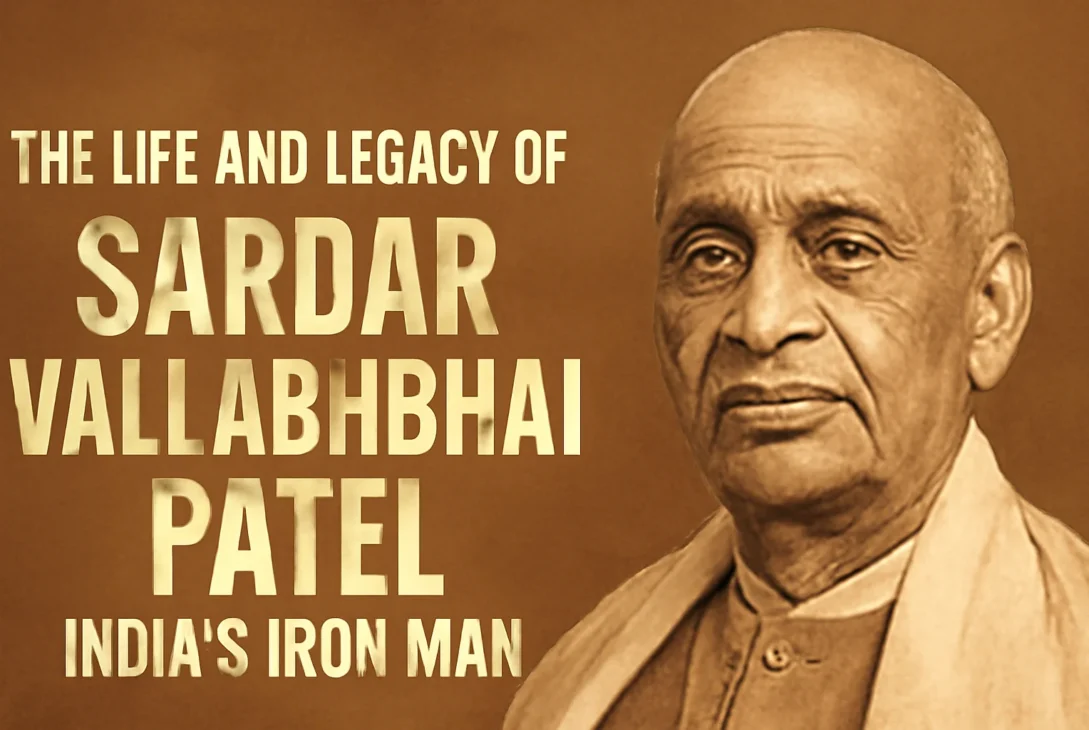
The Sardar Vallabhbhai Patel biography is not merely the story of a freedom fighter. It is the story of how modern India was held together at its most fragile moment. Patel emerged as a leader when unity was uncertain, authority was weak, and the future of the nation stood on the edge of chaos.
Born in 1875 in Gujarat, Patel rose from a modest rural background to become the strongest pillar of India’s political consolidation. His leadership during the freedom struggle, and more importantly, after independence, earned him the enduring title of the Iron Man of India. While many leaders inspired the masses, Patel organized, disciplined, and unified the nation.
This article explores Patel’s life in depth — from his early struggles and legal career to the Kheda Satyagraha, his partnership with Gandhi, and his decisive role in integrating princely states. His legacy remains a blueprint for leadership rooted in realism, courage, and national duty.
Early Life and Education of Vallabhbhai Patel
Sardar Vallabhbhai Patel was born on 31 October 1875 in Karamsad village, Gujarat, to Zaverbhai Patel and Ladba. Raised in a farming family, Patel absorbed values of discipline, self-reliance, and endurance early in life. His father’s participation in the 1857 uprising left a lasting patriotic influence.
Patel’s childhood reflected quiet determination rather than brilliance. He balanced household responsibilities with education, showing exceptional focus. Despite financial constraints and social customs like early marriage, he completed his matriculation in 1897.
Later, Patel studied law independently and became a successful barrister in Godhra. His legal practice earned him respect for fearlessness and fairness. Unlike many contemporaries, he chose not to rely on patronage. Instead, he built credibility through competence.
These formative years shaped Patel’s belief that strength comes from discipline, not privilege.
Kheda Satyagraha: Patel’s First Test of Leadership
The Kheda Satyagraha (1918) marked the turning point in Patel’s public life. Gujarat’s farmers faced crop failure due to floods and plague, yet the British administration refused to relax land revenue demands.
Patel stepped forward as the farmers’ leader. He organized resistance with precision and restraint. Instead of emotional rebellion, he insisted on unity, discipline, and legal clarity. Farmers were asked to withhold taxes peacefully until justice was granted.
The British eventually conceded. This victory established Patel as a mass leader and administrator. More importantly, it demonstrated his leadership style — firm, organized, and results-oriented.
Why Kheda Satyagraha Was Crucial
- It transformed a regional grievance into a national example.
- It proved that mass movements could succeed without chaos.
- It brought Patel into the core leadership of the freedom movement.
From Lawyer to National Leader
Although Patel enjoyed a flourishing legal career, he gradually shifted focus to public service. He was deeply disturbed by British arrogance and racial discrimination. Gandhi’s leadership inspired him, but Patel added his own strength — organizational mastery.
In Ahmedabad, Patel gained popularity for defending workers and the poor. His financial success allowed him to support family obligations, including sending his brother abroad for studies, sacrificing his own aspirations.
Patel’s reputation grew not through speeches but through action. He became known as a leader who delivered outcomes, not promises.
Role in the Indian Freedom Struggle
Patel emerged as one of the most dependable leaders of the Indian freedom struggle. He organized movements, enforced discipline among volunteers, and ensured coordination between leadership and grassroots workers.
Unlike flamboyant leaders, Patel operated behind the scenes. He believed revolutions fail without structure. His partnership with Gandhi was based on trust — Gandhi inspired, Patel executed.
He played critical roles in:
- Bardoli Satyagraha
- Civil Disobedience Movement
- Organizational restructuring of Congress
His leadership style made him indispensable.
First Deputy Prime Minister of India
After independence in 1947, Patel assumed the roles of First Deputy Prime Minister of India and Home Minister. India faced its gravest challenge — political fragmentation.
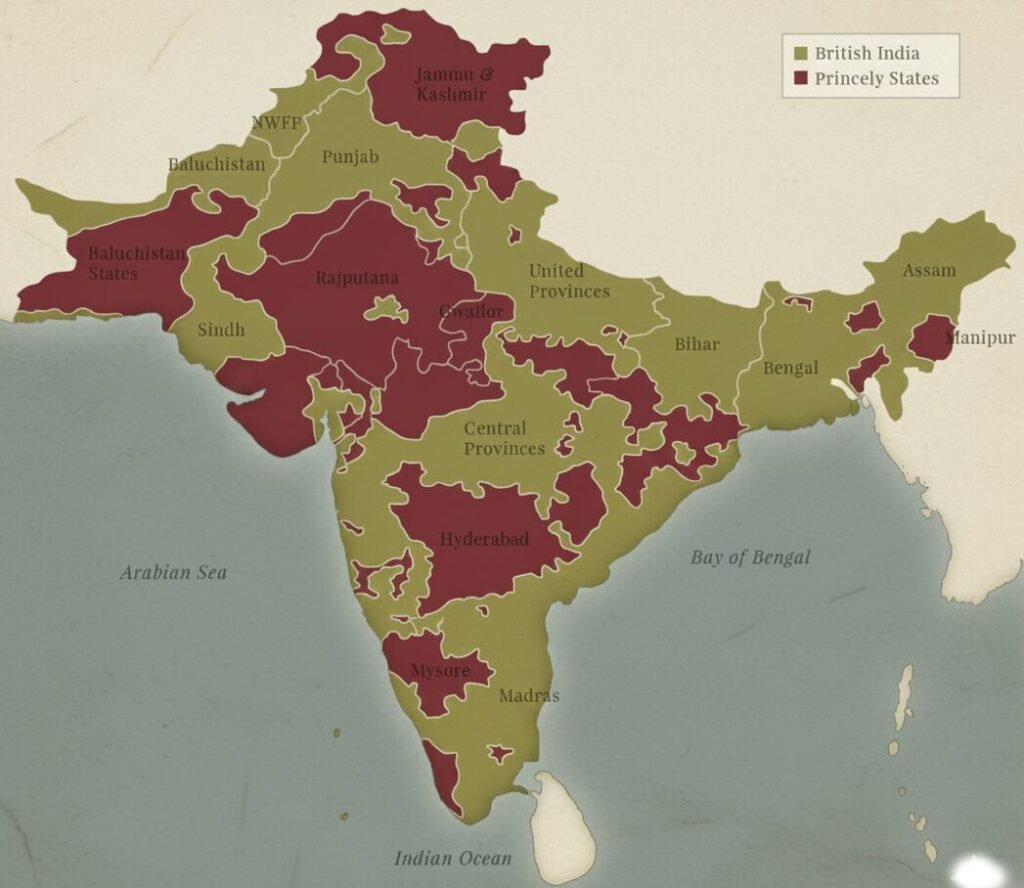
Over 560 princely states existed, many unwilling to join India. Patel handled this crisis with diplomacy backed by resolve. Through negotiation, persuasion, and, where necessary, pressure, he integrated almost all states.
This achievement prevented civil war and territorial disintegration.
Integration of Princely States
- Hyderabad
- Junagadh
- Kashmir (initial integration)
- Smaller princely territories
Iron Will: Personal Endurance and Sacrifice
Patel’s strength was not symbolic. As a young man, he endured severe pain during a traditional surgery without anesthesia. This incident became legendary, reflecting his extraordinary mental control.
After his wife’s death, Patel chose not to remarry, dedicating himself to his children and national service. Personal grief never weakened his resolve.
His life reflected duty over emotion — a principle he applied consistently.
Political Rise in Gujarat and National Leadership
Patel served as the Mayor of Ahmedabad, earning admiration during plague outbreaks for his decisive action. His administrative success propelled him into national leadership.
Within the Indian National Congress, Patel was the chief organizer. He ensured elections, discipline, and unity. Leaders depended on him to stabilize the party during crises.
The Legacy of Unity
Patel’s greatest legacy is India’s unity. Without his leadership, the subcontinent may have fractured irreversibly. His work laid the foundation for stable governance.
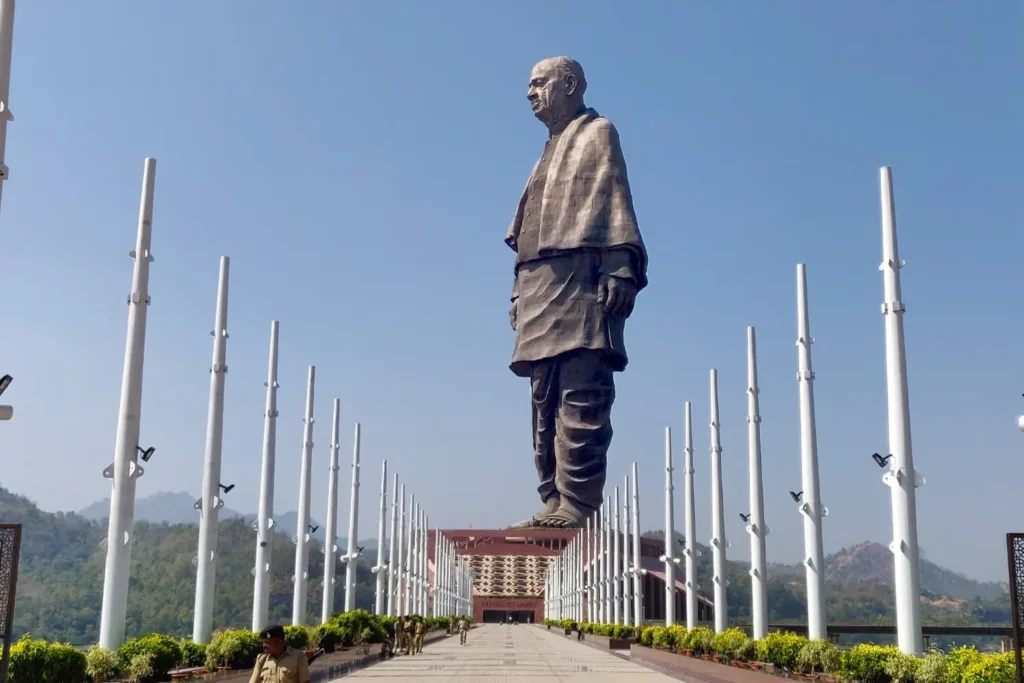
The Statue of Unity in Gujarat stands today as a recognition of his contribution. At 182 meters, it symbolizes strength, foresight, and national resolve.
Conclusion
The Sardar Vallabhbhai Patel biography reveals a leader who chose responsibility over popularity and unity over ideology. He was not driven by applause but by duty.
Patel’s strength lay in execution. He transformed chaos into order and diversity into unity. His legacy as the Iron Man of India continues to guide the nation.
In an era of uncertainty, Patel’s life reminds us that nations survive through discipline, courage, and unwavering leadership.